Ceramic vs KCF Guide Sleeves: Heat Resistance Compared

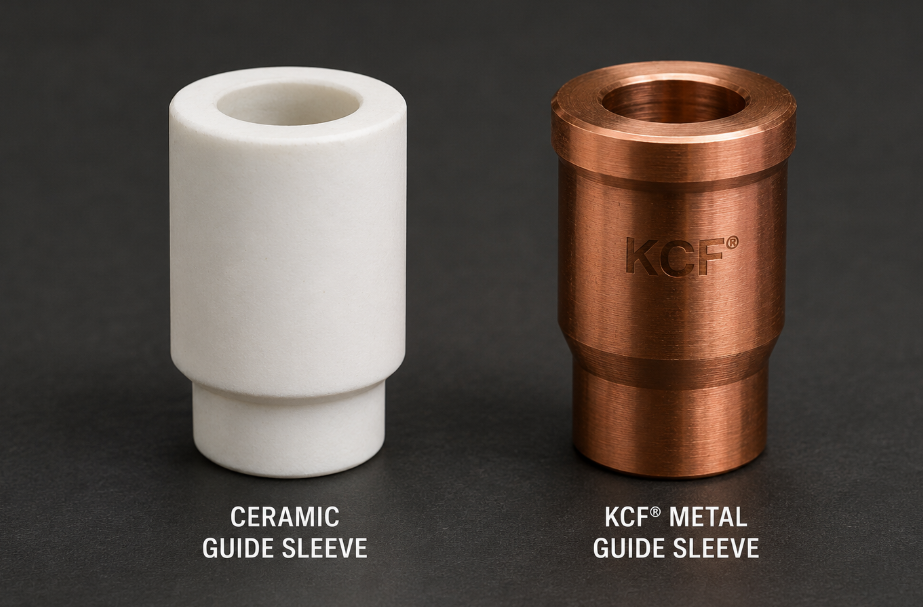
A guide sleeve is a different animal from a guide pin, and the choice between ceramic and KCF for a sleeve turns on different factors than it does for a pin. Where a pin is solid and locates from the outside, a sleeve is hollow — it has an inner bore that does real work, often guiding a bolt or housing a pin, and that bore introduces a whole set of considerations a solid pin never faces. Because our factory makes both ceramic and KCF sleeves, we have no stake in steering you toward one; we supply whichever the application actually rewards. This comparison lays out where each genuinely wins, with heat resistance — where ceramic has a real edge — as the central question.
If you have already read our comparison of KCF versus ceramic guide pins, some of the material trade-offs will be familiar, but the sleeve changes the emphasis. The bore, the wall thickness, and the thermal behavior of a hollow part shift the decision in ways worth understanding before you specify
one.
What a Guide Sleeve Does — and Why It Differs From a Pin
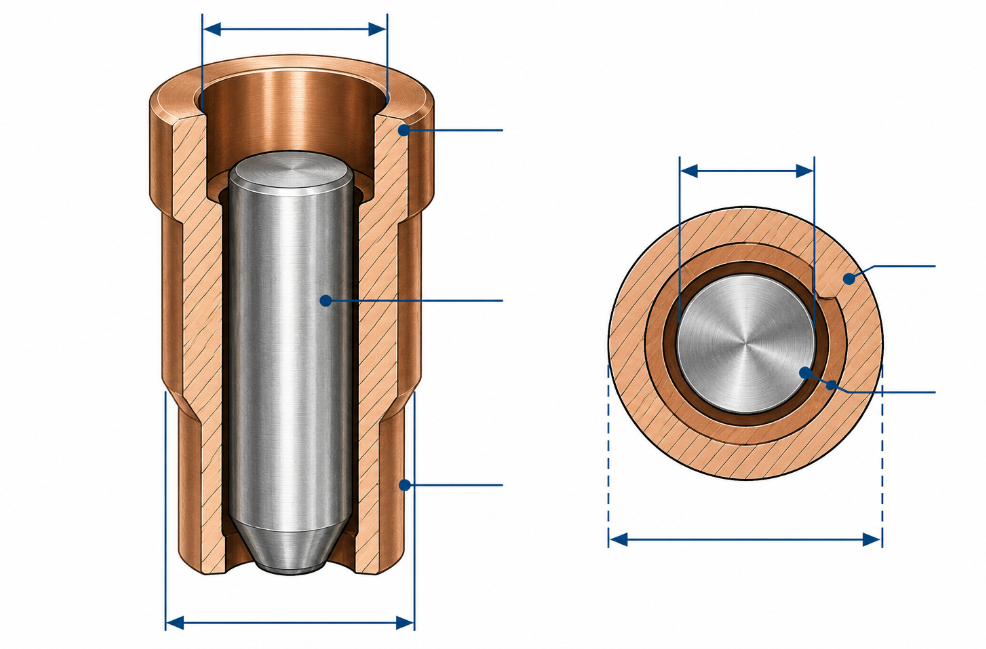
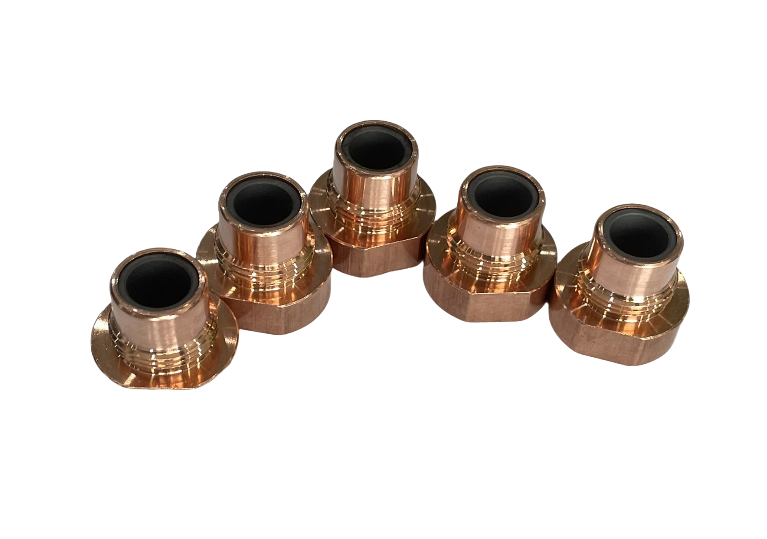
In our customer base, guide sleeves show up in four main roles: guiding a bolt or stud during welding (the sleeve guides the fastener), working together with a guide pin (the pin sits inside the sleeve), locating larger-diameter weld nuts, and serving as a guiding surface for a moving component. In every case, the defining feature is the same: a sleeve is hollow, and its inner bore is a functional surface.
That hollowness is the whole reason a sleeve is specified and selected differently from a pin. A solid pin has one critical diameter — its outside. A sleeve has at least two: the outer diameter that fits the fixture, and the inner bore that guides the fastener or houses the pin. Both must be right, and the relationship between them — the wall thickness — becomes its own specification. None of this exists for a solid pin, and all of it shapes the ceramic-versus-KCF decision for a sleeve.
Where Ceramic Guide Sleeves Genuinely Win
Honesty about where the competing material wins is the foundation of a useful comparison — and for sleeves, ceramic has real, defensible advantages in three areas.
Ceramic Sleeves Resist High Temperatures Better
This is ceramic’s headline strength and the central question of this article. A sleeve positioned close to the weld zone soaks in heat, and ceramic simply tolerates high temperature better than a metal-cored part. Technical aluminas are engineered for high operating temperatures, low thermal expansion, and superior thermal shock resistance, with thermal resistance reaching 1500 °C or more in CoorsTek’s technical ceramics thermal data. For a sleeve sitting in a high-heat position, that temperature tolerance is a genuine engineering advantage, and where heat is the dominant stress, ceramic deserves serious consideration.
Ceramic Sleeves Resist Brass and Dross Adhesion Better
Ceramic’s second real advantage is chemical: it resists the adhesion of brass and weld dross better than many surfaces. For a sleeve — whose inner bore can collect spatter and buildup that fouls the fastener or the pin inside it — that non-stick character keeps the bore cleaner for longer. On lines where adhesion is the chronic problem, ceramic sleeves can reduce the cleaning burden.
Ceramic Sleeves Offer Purer Bulk Insulation
Because a ceramic sleeve is non-conductive throughout its entire body, its insulation does not depend on a surface layer remaining intact. There is no thin skin to wear through. In the most insulation-critical applications, or where a specification demands full-body non-conductivity, that bulk insulation is a real advantage — and one a surface-insulated part cannot match by definition.
Where KCF Guide Sleeves Win
Set against those strengths, KCF sleeves have advantages that matter on most production lines — and for sleeves specifically, one of them is sharper than it is for pins.
KCF Sleeves Resist Impact and Cracking — Especially in Thin Walls
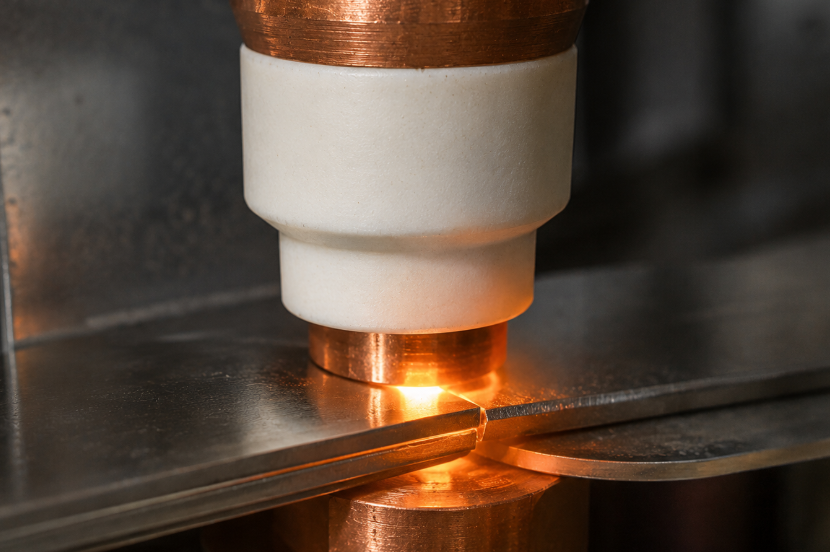
Here is where the hollow geometry changes everything. Ceramic is brittle: its strength drops sharply under thermal and mechanical stress, with research showing alumina’s residual strength falling from 375 MPa to roughly 190 MPa after thermal shock, governed by a brittle-to-ductile transition around 1000 °C in studies of alumina thermal shock resistance. A thin-walled ceramic sleeve is more vulnerable to this than a solid ceramic pin, because the thin wall has less material to resist crack propagation and impact. This is the decisive point for sleeves: when wall thickness is thin, KCF’s impact resistance becomes a pronounced advantage, because the metal core absorbs knocks that would chip or crack a thin ceramic wall. A sleeve that survives the mechanical reality of a busy line — knocks, fastener insertion, handling — is a sleeve that keeps running, and the thinner the wall, the more that toughness matters.
KCF Sleeves Can Be Machined to Custom Bore and Outer Diameter
The second KCF advantage is manufacturability, and for a two-diameter part it is especially valuable. Because KCF is a machinable metal-cored material, both the inner bore and the outer diameter can be turned to a customer drawing. Ceramic’s geometry is largely fixed at firing, with limited and costly post-fire machining. When a sleeve needs a specific bore to house a particular pin, or a specific OD to fit a particular fixture — and a sleeve almost always needs both matched to the application — KCF’s machinability is a recurring practical win. We machine sleeve bore and OD to drawing routinely; the same custom request in ceramic means longer lead times and tighter design limits.
Ceramic vs KCF Guide Sleeves: Side-by-Side
| Factor | Ceramic Sleeve | KCF Sleeve |
|---|---|---|
| High-temperature tolerance | Excellent — up to very high temperatures | Good, but below ceramic’s ceiling |
| Impact / crack resistance | Low — brittle, worse in thin walls | High — metal core absorbs knocks |
| Brass / dross adhesion | Resists adhesion well | Less non-stick than ceramic |
| Insulation type | Full-body (bulk) | Surface layer over metal core |
| Bore & OD machinability | Largely fixed at firing | Machined to drawing |
| Thin-wall durability | Vulnerable to cracking | Strong advantage |
| Custom lead time | Longer | Shorter |
The table makes the split clear: ceramic owns the thermal and chemical extremes; KCF owns impact resistance, thin-wall durability, and machinability. Which column matters is decided by your application, not by either material being “better.”
The Sleeve Specifications That Matter Most
Choosing a sleeve well means getting several specifications right — and the most consequential ones are exactly the ones that do not exist for a solid pin.
Inner bore dimension and tolerance — the most critical. The bore is the sleeve’s defining feature, and its dimension and tolerance are the single most important specification. If the sleeve houses a pin, the bore must match the pin with the correct clearance; if it guides a fastener, the bore must guide it accurately. The international system for specifying exactly this kind of bore fit is ISO 286, which defines hole and shaft tolerance classes for mating parts and is the standard language for bore tolerances and clearance fits. A bore tolerance that is wrong in either direction — too tight binds, too loose lets the fastener or pin wander — is the most common way a sleeve disappoints.
Outer diameter and fixture fit. The OD must fit the fixture seat correctly, with the same too-tight/too-loose logic that governs any locating part: too large risks damage on installation, too small allows movement.
Sleeve-to-pin clearance (when used together). When a sleeve houses a pin — one of the most common configurations — the clearance between the sleeve’s bore and the pin’s outer diameter is a distinct specification in its own right, separate from how either part fits the fixture. This clearance has to be tight enough that the pin locates accurately within the sleeve, yet loose enough that the pin moves freely if the design calls for movement and does not bind as both parts heat. Getting it wrong produces a frustrating, hard-to-diagnose problem: the sleeve fits the fixture, the pin measures correctly on its own, yet the pair binds or wanders in service because nobody specified the relationship between them. This is a case where two correct individual parts still fail as an assembly — and it is why, when we supply a sleeve and pin meant to work together, we treat their mutual clearance as a deliberate specification rather than leaving it to chance.
Wall thickness. The wall — the difference between bore and OD — is its own consideration. Too thin and the sleeve becomes fragile, vulnerable to cracking (especially in ceramic) and deformation. The wall thickness has to balance the bore and OD the application needs against the structural integrity the sleeve requires, and this balance is precisely where KCF’s toughness buys design freedom that brittle ceramic does not allow.
Thermal expansion of the bore. This is the specification unique to a heated hollow part, and it is easy to miss. As the sleeve heats during welding, the bore dimension changes — thermal expansion alters the inner diameter, which changes the clearance with the pin or fastener inside it. A clearance that is correct cold can bind hot. ISO 286 fit selection accounts for thermal effects precisely because, as fit references note, operating temperature and the coefficient of thermal expansion must factor into the clearance chosen. For a welding sleeve, designing the bore clearance with the hot condition in mind — not just the cold measurement — is what separates a sleeve that keeps working at temperature from one that seizes.
The table below summarizes the sleeve specifications and which material consideration each one raises.
| Specification | Why It Matters | Material Consideration |
|---|---|---|
| Inner bore dimension & tolerance | Most critical — guides pin or fastener | Both materials must hold it; KCF machinable to bore |
| Outer diameter & fixture fit | Must seat correctly without damage or play | Standard fit logic; KCF machinable to OD |
| Wall thickness | Structural integrity vs bore/OD needs | Thin walls favor KCF toughness over brittle ceramic |
| Thermal expansion of bore | Hot clearance differs from cold | Design for hot condition; matters most near weld |
| Insulation requirement | Stray-current prevention | Surface layer (KCF) vs full-body (ceramic) |
Read down the right-hand column and a pattern emerges: the bore and wall specifications repeatedly favor KCF’s machinability and toughness, while the thermal and insulation extremes are where ceramic’s properties pull their weight. The specification sheet itself, in other words, encodes the same split as the materials comparison.
Real Cases: Choosing the Right Sleeve
Three customer situations show the decision playing out.
Case 1 — KCF sleeve solves thin-wall cracking. A customer running ceramic sleeves was losing them to cracking — the thin wall could not survive the mechanical knocks of the line. Switching to KCF sleeves, with the metal core absorbing the impact, the cracking problem resolved. This is the thin-wall advantage in practice: where ceramic’s brittleness met a thin geometry, the tougher material simply held up.
Case 2 — Corrected bore tolerance restores performance. Another customer had sleeves that located poorly and wore early. The inner bore tolerance was wrong for the pin running inside it. Re-machining the bore to the correct tolerance restored accurate location and extended life — a reminder that for a sleeve, the bore specification is everything.
Case 3 — Ceramic sleeve suits a high-heat position. A customer with a sleeve positioned very close to the weld, in sustained high heat, was better served by ceramic. Here ceramic’s superior temperature tolerance was the deciding factor, and we supplied ceramic rather than pushing KCF — because in that thermal environment, ceramic was the right engineering answer.
The thread: each case was decided by matching the sleeve to its dominant stress — impact, bore fit, or heat — not by a default preference.
How to Choose Between Ceramic and KCF Guide Sleeves
A practical decision path:
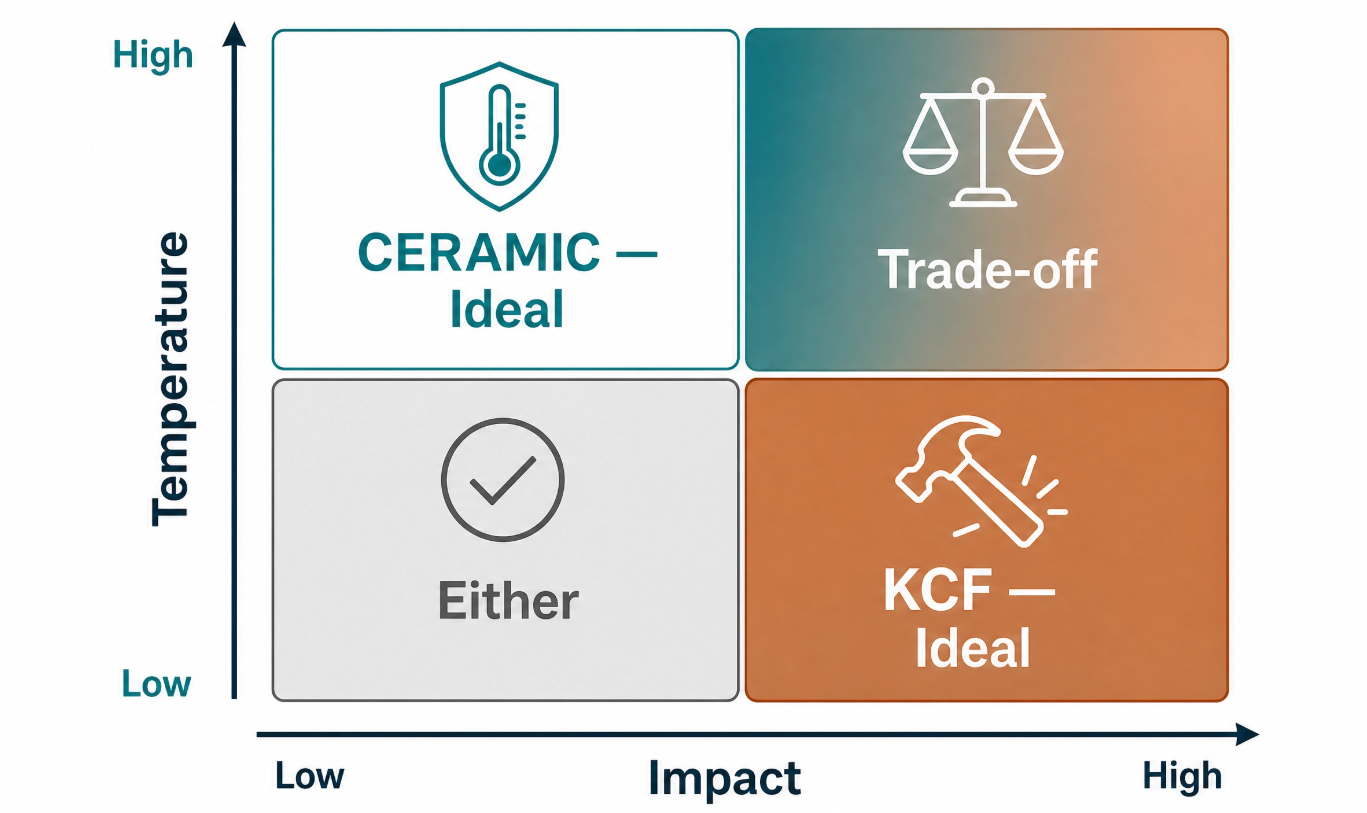
- Identify the dominant stress. Sustained high heat near the weld → ceramic. Mechanical impact and handling, especially with thin walls → KCF.
- Consider the wall thickness. Thin wall → KCF’s toughness becomes a strong advantage. Generous wall in a high-heat spot → ceramic is more viable.
- Weigh adhesion. Chronic brass or dross fouling of the bore → ceramic’s non-stick edge helps.
- Check customization needs. Custom bore and OD to drawing → KCF’s machinability. Standard geometry in extreme heat → ceramic.
- Confirm insulation requirements. A specification mandating full-body insulation → ceramic.
In our experience, the thin-wall impact advantage sends many general sleeve applications toward KCF, while genuinely high-heat or adhesion-limited positions are correctly served by ceramic. Both are legitimate; the sleeve’s dominant stress decides.
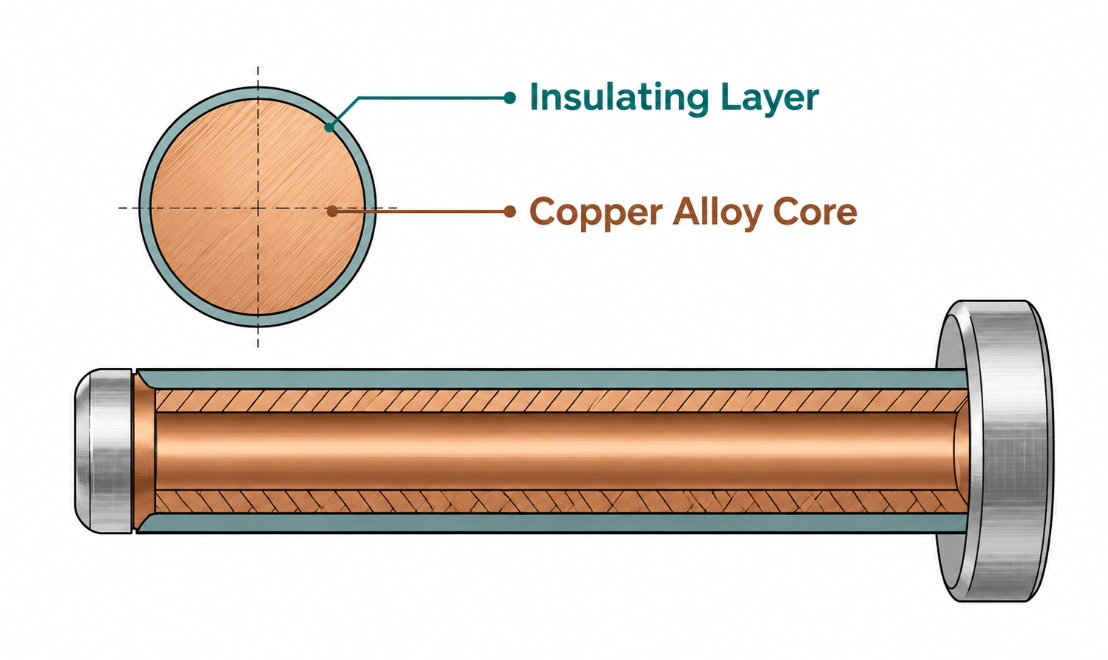
For the underlying material science behind both options, our explainer on what KCF alloy is covers the insulated-metal side, and the terms used throughout this comparison are defined in our spot welding parts glossary.
Final Thoughts on Ceramic vs KCF Guide Sleeves
The sleeve decision is the pin decision with the volume turned up on a few specific factors. Heat resistance — ceramic’s real strength — matters more for a sleeve sitting close to the weld, while impact resistance — KCF’s real strength — matters more for a thin-walled sleeve facing the mechanical reality of a line. The bore, the wall, and the thermal behavior of a hollow heated part are what make the sleeve its own decision rather than a repeat of the pin.
Because we make both, the most useful thing we can do is match the part to your situation. If you send us your application — the sleeve’s position and heat exposure, whether it houses a pin or guides a fastener, your bore and OD requirements, and your wall thickness constraints — we can tell you which material your own conditions point to, and machine a KCF sleeve to your bore and OD or supply ceramic where the heat demands it. Browse our ceramic pins and sleeves range, or send your application and let the diagnosis guide the choice.
Share This Article
Latest Articles
October 20, 2026
October 20, 2026
October 20, 2026
October 20, 2026
October 20, 2026
October 20, 2026
October 20, 2026
October 20, 2026