KCF Guide Pins & Sleeves: Types, Sizes, and Custom Options

A KCF guide pin or sleeve is a locating part with a special property: it’s a copper-based alloy component with an insulating surface layer, so it locates a part mechanically like metal while insulating electrically like ceramic — combining the toughness of a metal core with the insulation a welding locating part needs. But “KCF guide pin” spans a range: pins and sleeves, different head shapes, a range of diameters and lengths, and parts made to match a specific nut, bore, or drawing. Choosing well means knowing the types, the specifications, and the custom options. This guide covers the KCF locating parts themselves — what types we make, the sizes and specifications available, and how parts are matched or customized to your application — as a product guide.
For how KCF compares to the alternatives, see our pieces on KCF vs ceramic guide pins and KCF guide pins explained. This article assumes you’re specifying KCF and focuses on the parts and their options.
What Makes KCF Guide Parts Distinctive
Before the types, it’s worth being clear on what KCF is, because its nature shapes the whole product range. KCF is a special metal material that, through a heat-treatment process, forms a high-quality insulating layer on its surface — a layer that bonds well to the alloy core beneath, giving the material both good wear resistance and high insulation resistance at once. As industry material descriptions put it, KCF combines insulation, wear resistance, and anti-oxidation in one material used in resistance welding equipment, and its toughness has made it an increasingly popular alternative to brittle ceramic for nut-locating pins.
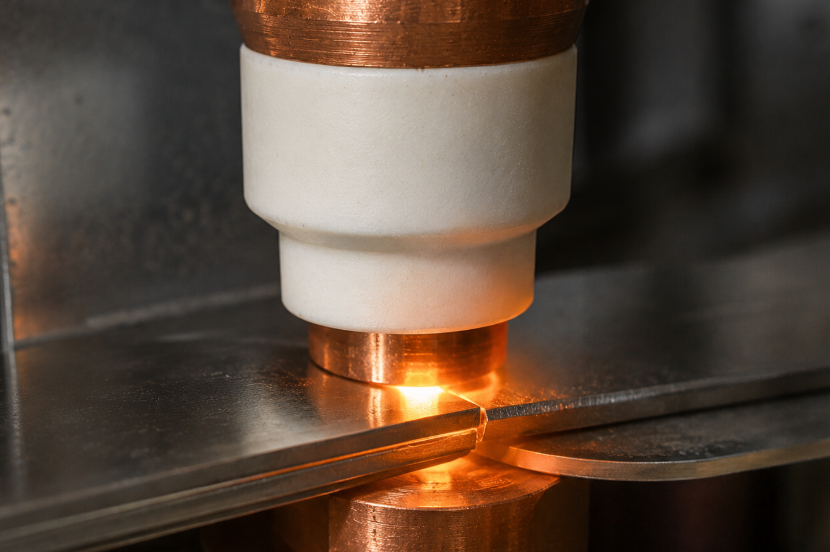
This matters for the product range because it explains what KCF parts are for. A welding locating pin must be electrically insulated — to prevent arcing between the nut and the pin during welding — and must also have excellent wear resistance and enough mechanical strength to resist chipping and breaking, with a smooth insulating surface so the nut slides on easily. These requirements are documented across the field: an insulated locating pin needs insulation to prevent arcing plus wear resistance and mechanical strength. KCF meets all of them at once — the insulating layer prevents arcing, the alloy core provides toughness and strength that all-ceramic pins lack, and the surface can be finished smooth. That combination is why KCF guide parts exist and what every part in the range delivers.
Types of KCF Guide Parts
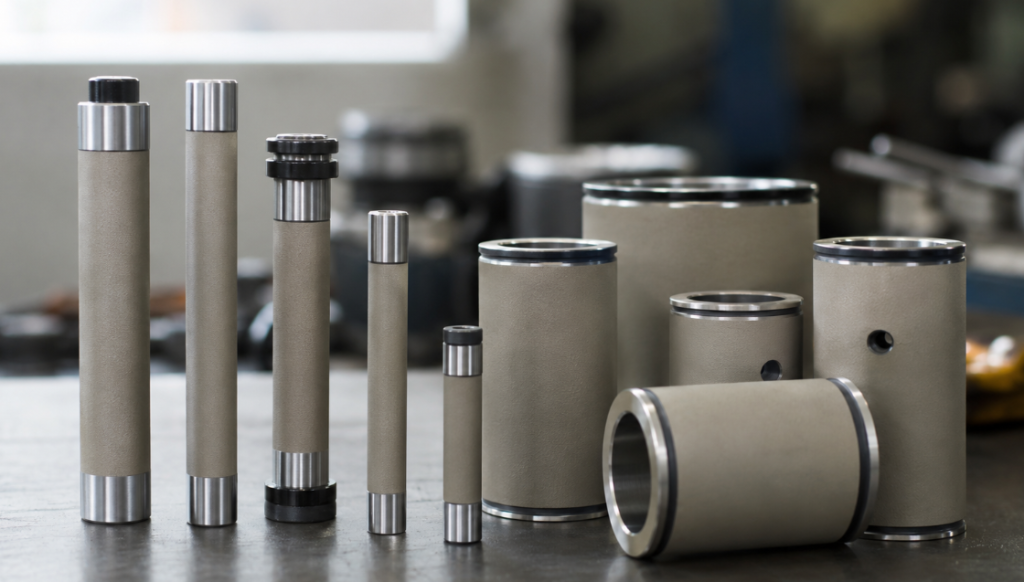
KCF locating parts come in several forms to suit different locating jobs. Knowing the types is the starting point for specifying what you need.
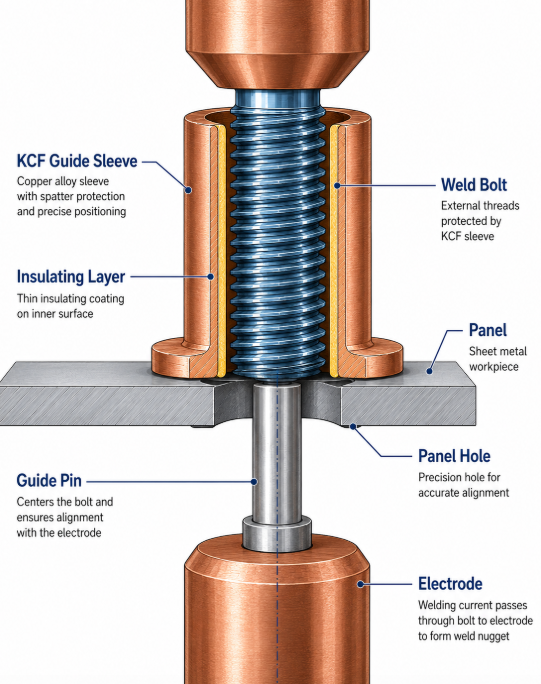
KCF guide pins. Locating pins that position a nut, bolt, or workpiece for welding while insulating against current. The guide pin is the core locating element — it passes through the nut’s thread or into the locating hole to center the part accurately, and its insulating layer prevents the current from shunting through it. Pins are the workhorse of the range.
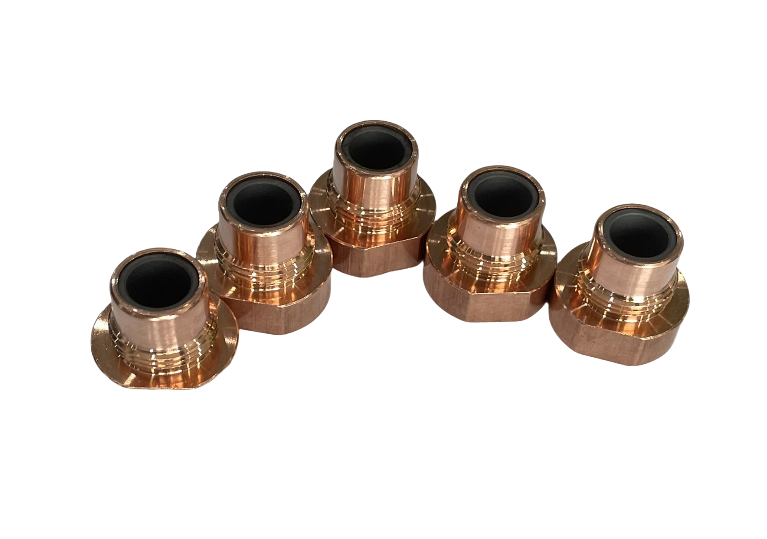
KCF guide sleeves. Sleeves — tubular KCF parts — that insulate and locate, often surrounding a pin or another element to isolate and position it. A sleeve provides an insulating, locating boundary in a tubular form, suited to applications where something sits within or passes through it. Pins and sleeves together cover most locating configurations.
Different pin head shapes. Guide pins come in different head and tip shapes to suit different nuts, holes, and locating needs — the head geometry that engages the part varies with what’s being located and how. The right head shape locates its specific part correctly, which is why a range of shapes exists.
Various diameters and lengths. KCF parts are made across a range of diameters and lengths, sized to the locating job — the diameter to fit the thread or bore, the length to reach and locate. A range of standard sizes covers common needs.
Custom shapes to drawing. Where a standard type or size doesn’t fit, KCF parts are made to a customer’s drawing. We produce KCF guide pins and sleeves to specification, because the locating part has to match the application — and a machinable KCF alloy makes made-to-drawing parts practical.
Table 1 — Types of KCF Guide Parts
| Type | Form | Role |
|---|---|---|
| KCF guide pin | Solid pin | Locate and insulate a nut/part |
| KCF guide sleeve | Tubular sleeve | Insulate around/locate a component |
| Different head shapes | Varied tip geometry | Match the specific nut/hole |
| Various sizes | Range of diameter/length | Fit the locating job |
| Custom to drawing | Made to spec | Fit where standard doesn’t |
The types divide by form and role — pins locate, sleeves insulate around, head shapes match specific parts. Which you need follows from the locating job and the nut or hole involved.
Specifications and Sizing
Beyond type, a KCF guide part is defined by its specifications — the dimensions and properties that make it fit, locate, and insulate. These are what to nail down when specifying a part.
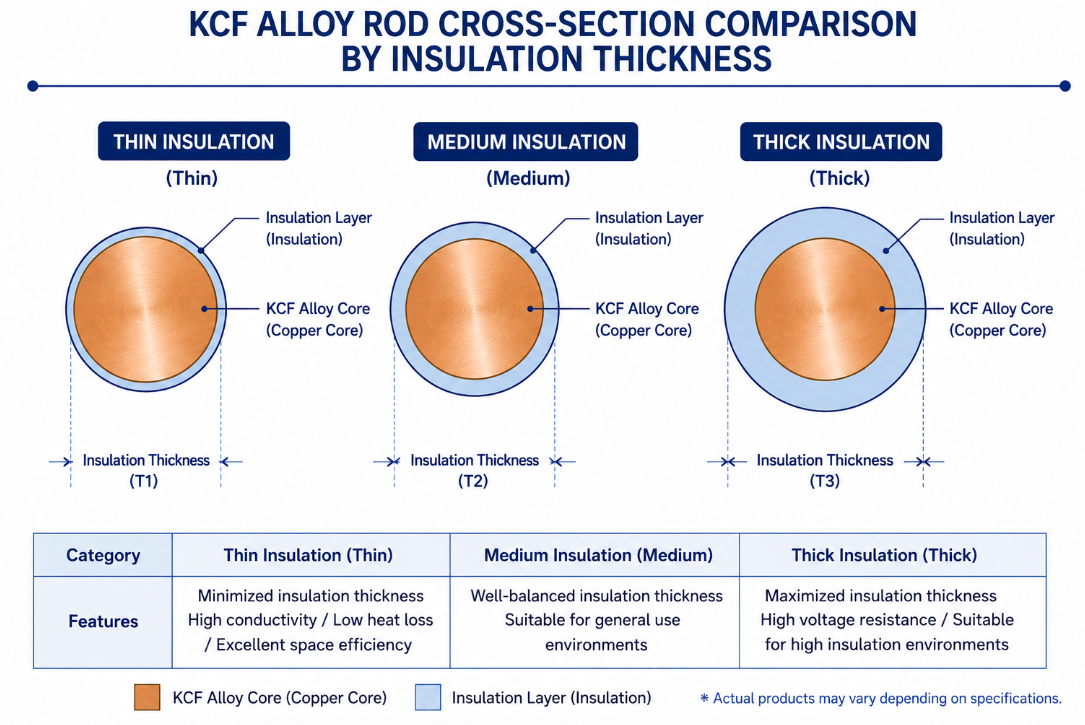
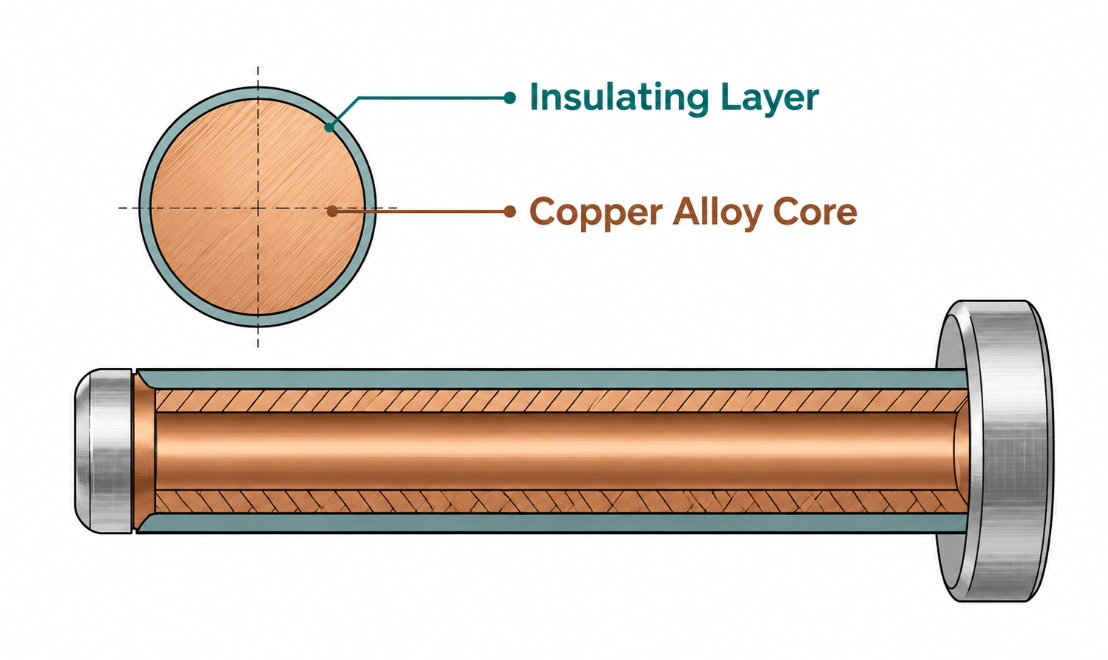
The copper-alloy core plus insulating layer. The defining structure: a copper-based alloy core, giving conductivity of heat and mechanical strength, with an insulating surface layer that prevents current shunting. This core-plus-layer construction is what gives KCF its combination of toughness and insulation, distinguishing it from both bare metal (no insulation) and all-ceramic (no metal toughness).
Matched to the nut or bolt size (M4–M12 and beyond). The part’s dimensions have to match the fastener it locates — its thread size and geometry, across the common M4 through M12 range and beyond. A pin sized to the specific nut or bolt locates it correctly; a mismatch can’t. This matching is the first-order specification for a locating part.
Diameter and size range. The basic dimensions — diameter and length — sized to the locating job and the bore or hole the part fits. These are set by where and how the part locates, and a range of sizes is available to suit.
The insulating layer. The insulating surface layer is central to the part’s function — it’s what prevents arcing and shunting. The layer’s quality and integrity matter, since it’s the feature that makes the part insulate, and it needs to bond well to the core and present a smooth surface for the nut to slide on.
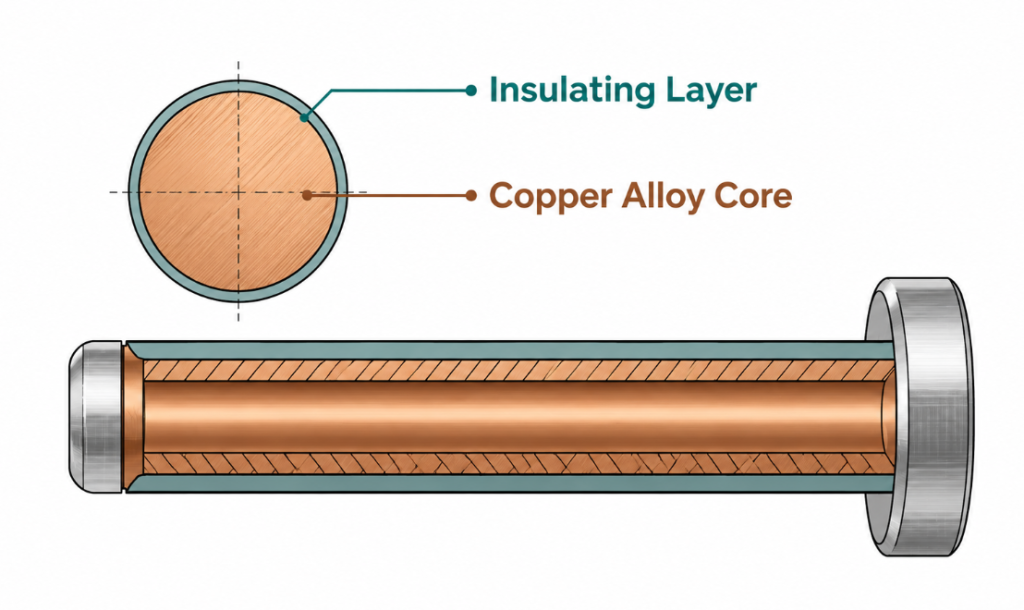
Understanding how this layer works explains why KCF is such a capable material. The insulating layer is formed on the alloy’s surface through KCF’s heat-treatment process, and crucially it bonds strongly to the alloy core beneath rather than sitting as a loose coating — this good bond between layer and core is what lets the material deliver wear resistance and high insulation resistance together, rather than trading one for the other. The smoothness of the layer matters too: a smooth insulating surface lets the nut slide onto and off the pin easily, which aids the locating action and reduces the friction that would otherwise wear both pin and nut. So the insulating layer is not just an electrical feature but a functional surface — insulating, well-bonded, wear-resistant, and smooth — and its quality is a real differentiator between a good KCF part and a poor one. This is a reason to source KCF parts where the layer is properly formed and bonded.
Matched to the customer’s bore. Where the part locates in a specific hole or bore, its dimensions are matched to that bore — the fit that positions the part correctly. We match parts to the customer’s bore, because the locating fit has to suit the specific hole.
Made to drawing. All of these come together in a made-to-drawing part: type, size, fit, and the KCF material specified for the application. We machine KCF parts to customer drawings, the way to get a part that fits precisely and locates accurately.
Table 2 — KCF Guide Part Specification Checklist
| Specification | What to Determine |
|---|---|
| Type | Pin, sleeve, head shape, or custom form |
| Material structure | KCF alloy core + insulating layer |
| Fastener match | Sized to the nut/bolt (M4–M12 and beyond) |
| Diameter & length | Sized to the locating job |
| Bore / fit | Matched to the hole it locates in |
| Custom to drawing | Made to spec where standard doesn’t fit |
The checklist is the full specification: type and material set what the part is, fastener match and dimensions set how it locates, bore fit and customization set how precisely. Answering these specifies a KCF part completely.
What Customers Care About: Accuracy, Insulation, Wear
Three properties matter most to customers specifying KCF locating parts, and each ties to a specification.
Locating accuracy — dimensional precision and tolerance. Because a guide pin’s whole job is positioning, its dimensional accuracy governs how precisely it locates. Tight tolerances on the critical dimensions give accurate, repeatable location; loose ones let the part drift. This is why tolerance matters and why it’s specified for accuracy-critical parts. Locating pins and bushings have their form and position tolerances specified according to the working conditions, as fixturing references note, and the workpiece-locating end is crucial for the pin’s precision and longevity.
Insulation reliability. The insulating layer has to reliably prevent shunting and arcing — the part’s electrical function depends on it. A reliable insulating layer is what lets the part do its isolating job weld after weld, and it’s a core reason to source quality KCF parts where the layer is sound.
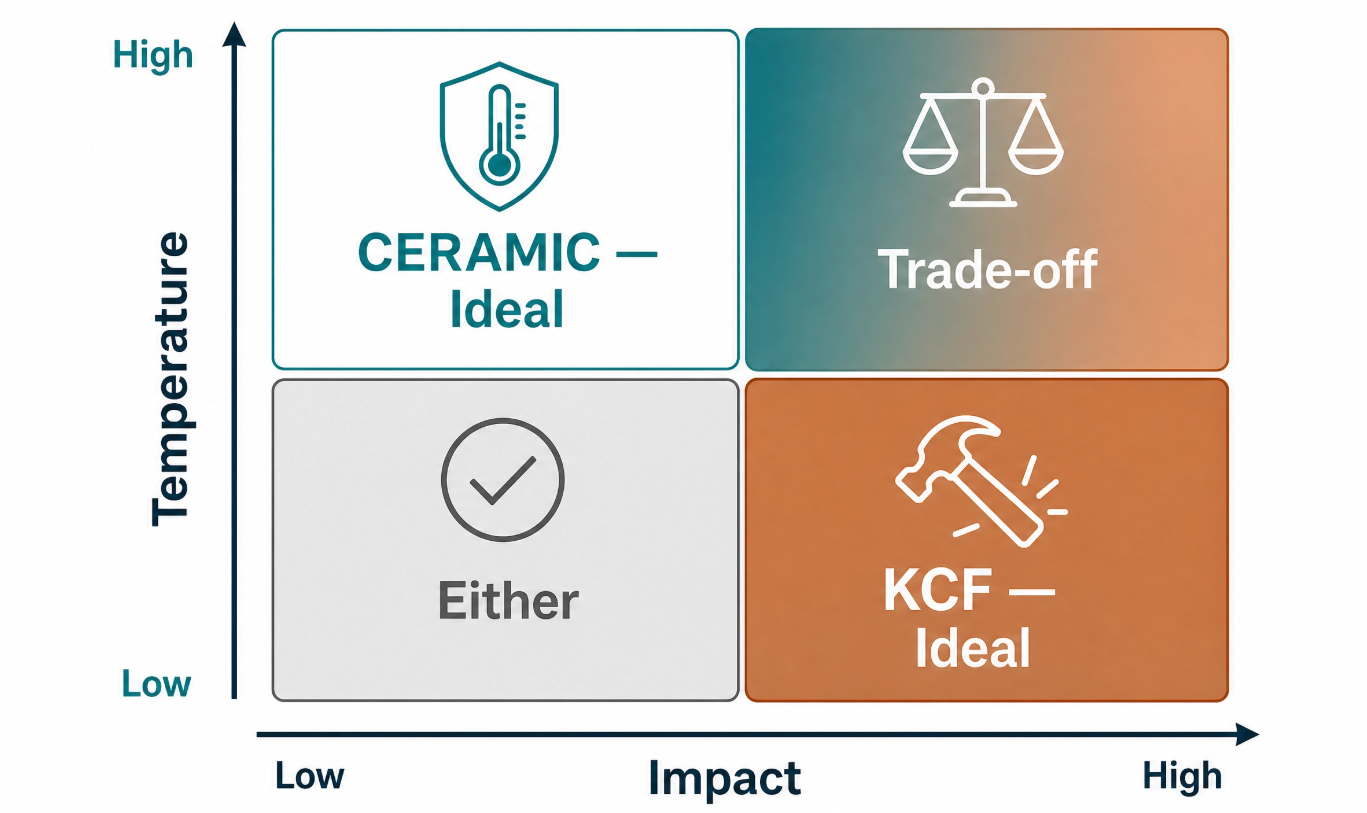
Wear resistance and life. Because the pin is handled and loaded repeatedly, wear resistance governs how long it locates accurately before needing replacement. KCF’s wear resistance — one of its defining properties — is what gives the part a useful service life, and it’s a key advantage over less wear-resistant options. This is also where KCF’s toughness pays off in a way ceramic can’t match: a KCF pin resists not only gradual wear but the sudden chipping and cracking that end brittle ceramic pins early, so it holds its locating accuracy through the mechanical knocks of handling and production. The result is a locating part that stays accurate longer and needs replacing less often, which is a real operating advantage on a busy line.
Matched to the bore, machined to drawing. Underlying all three is the fit — a part matched to the workpiece bore and, where needed, machined to the customer’s drawing, so it locates accurately from the start. Getting the fit right is the foundation the accuracy, insulation, and wear build on.
A Note on KCF’s Nature When Specifying
One aspect of KCF’s nature is worth keeping in mind when specifying: the insulating layer is a surface feature over the alloy core, so the part is designed and handled to keep that layer intact. This is generally straightforward — KCF is tough and wear-resistant, far more forgiving than brittle ceramic — but it does mean the insulating surface is the functional feature to protect, and specifications account for it. The upside is substantial: because KCF has a tough metal core, it resists the chipping and breaking that afflict all-ceramic pins, making it more robust in handling and service. Specifying a KCF part is specifying a locating part that is both insulating and tough — the combination that makes it a practical alternative to ceramic.
Getting the Right KCF Guide Part
Two real situations show KCF part selection in practice.
Matched to the nut and bore. For a customer needing pins to locate a specific nut in a specific hole, matching the pin’s size and fit to their nut and bore gave accurate location — the part sized to the fastener and the hole it works in. Getting that match right is the foundation of accurate locating, and it’s much of what specifying a KCF pin involves.
Custom part to drawing. For a customer needing KCF locating parts to a specific geometry their standard options didn’t cover, we produced parts to their drawing — the type, dimensions, and fit their application required. Made-to-drawing capability is central to KCF part supply, because locating geometries and fasteners vary so widely from line to line.
Both reflect this article’s approach: specify the part — type, size, fit — to the application and the fastener, and the part locates accurately and insulates reliably. A KCF part made to the right specification does its job.
Specify the KCF Guide Part Your Application Needs
KCF guide pins and sleeves are tough, insulating locating parts — a copper alloy core for strength with an insulating layer for isolation — and specifying one comes down to the type (pin, sleeve, head shape, or custom form), the size (matched to your nut or bolt and bore, across M4–M12 and beyond), and the fit (machined to your drawing where standards don’t cover it). Matching each to your application and fastener — the right type, the right size, the right fit — is what gets you a KCF part that locates accurately, insulates reliably, and resists wear, giving the toughness of metal with the insulation a welding locating part needs.
Tell us what you need — the type of part, your nut or bolt size, the bore it locates in, and any drawing — and we’ll supply KCF guide pins and sleeves matched to your application, made to your drawing where needed. Browse our KCF guide pins and sleeves range, or send us your part requirements and let’s get you the right KCF locating parts for your line.
References
- Rosen Welding — KCF Guide Pin & KCF Sleeves (KCF material: insulation, wear resistance, anti-oxidation): https://rosenweld.com/kcf-guide-pin/
- USPTO — Insulated guide pin (requirements: insulation to prevent arcing, wear resistance, mechanical strength): https://image-ppubs.uspto.gov/dirsearch-public/print/downloadPdf/6175097
- Yiheda / China-ME — A Comprehensive Guide to Locating Pins and Bushings (types, tolerances, fit): https://www.china-me.com/news/article/a-comprehensive-guide-to-locating-pins-and-bushings
Share This Article
Latest Articles
October 19, 2026
October 19, 2026

October 19, 2026
October 19, 2026
October 19, 2026

October 19, 2026
October 19, 2026
October 19, 2026