KCF vs Ceramic Guide Pins: Which Lasts Longer in Spot Welding?

Every few weeks, a customer who currently runs ceramic locating pins asks us the same question: should they switch to KCF guide pins, or stay with ceramic? Because our factory produces both, we have no incentive to push one over the other — we sell whichever genuinely fits the line. That puts us in a good position to answer honestly, and the honest answer is that “which lasts longer” depends entirely on what is killing your pins in the first place.
This comparison lays out where KCF guide pins win, where ceramic legitimately wins, and how to read your own failure pattern to choose correctly. If your pins are cracking, the answer is almost certainly KCF guide pins. If they are surviving impact fine but you are fighting brass adhesion or extreme heat, ceramic may be the better call. By the end you will be able to make that decision from your own scrap bin rather than from a sales pitch.
What KCF Guide Pins and Ceramic Pins Actually Do
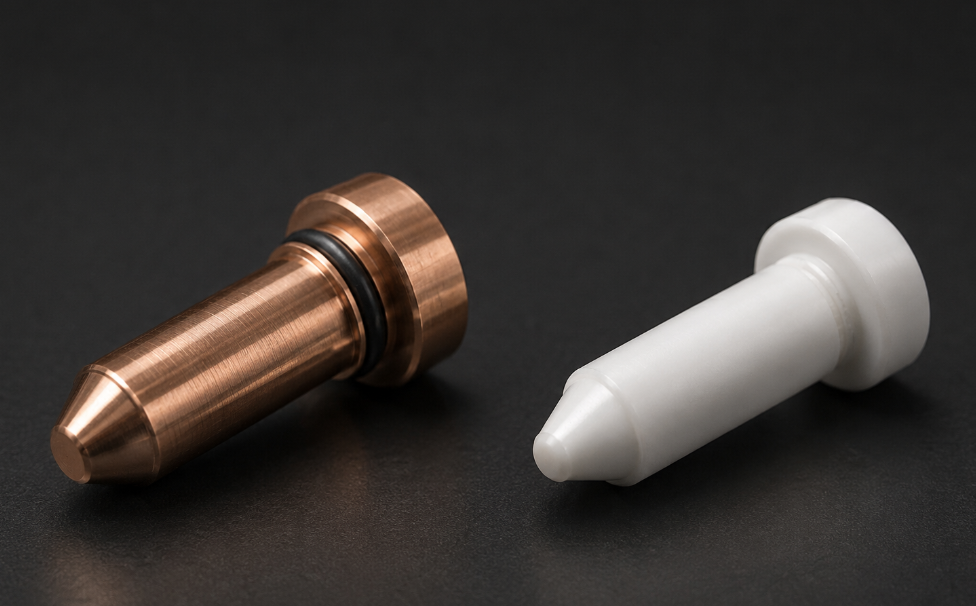
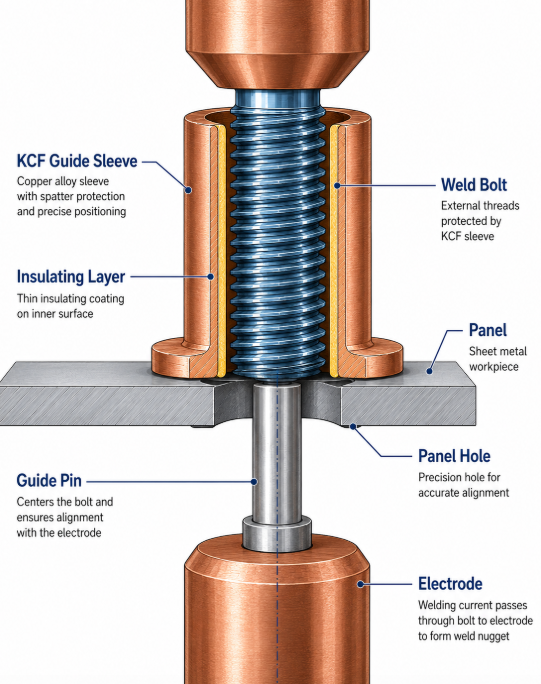
Before comparing lifespan, it helps to be clear that both parts do the same job: they locate and position a nut, bolt, or stud during resistance welding without conducting the welding current. Neither is a conductive electrode. Both are insulators sitting inside a live welding zone, and both must hold tight position while staying electrically out of the way.
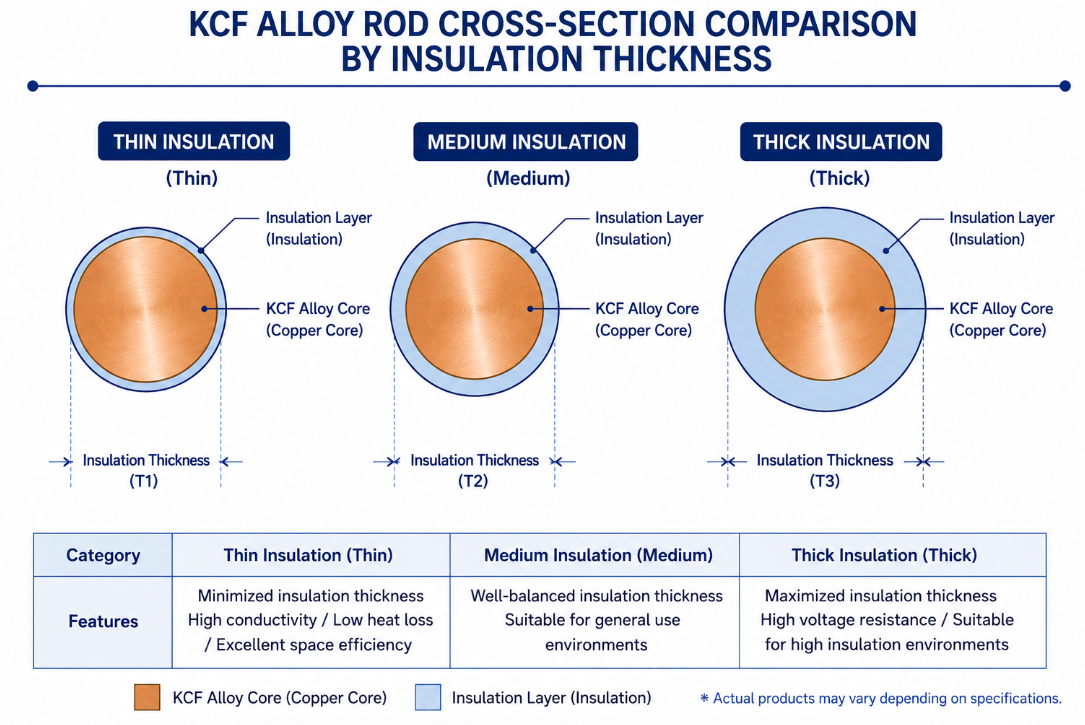
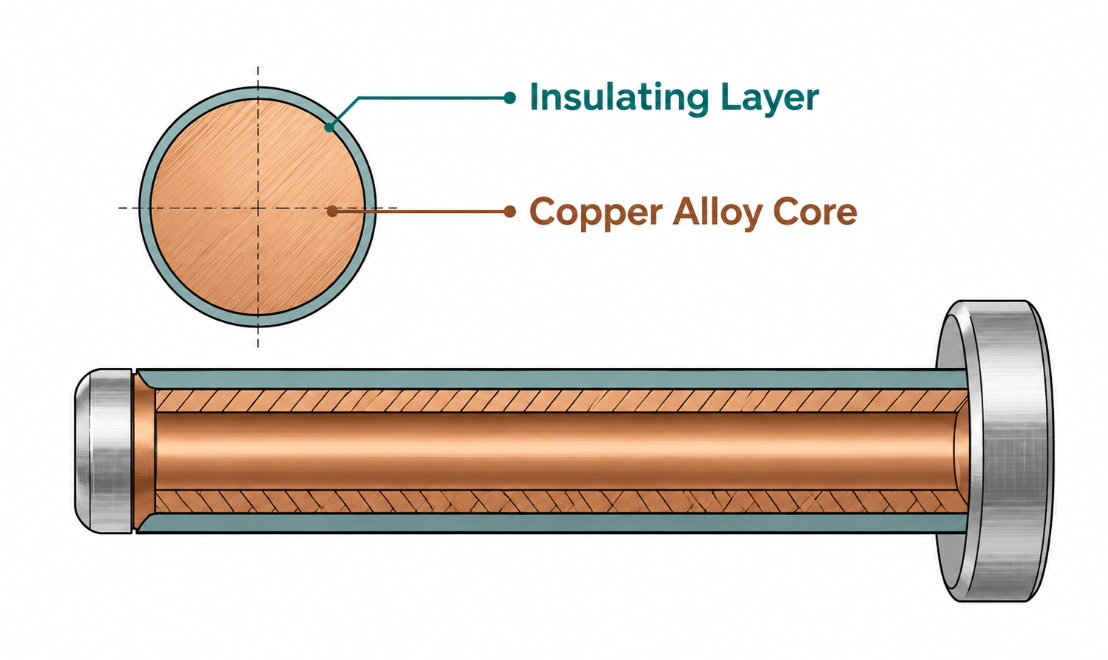
The difference is how they achieve insulation. A ceramic pin is non-conductive throughout its entire body — the whole part is an insulator. KCF guide pins, by contrast, are a copper-based alloy carrying a hard insulating surface layer of roughly 8–15 μm, so the insulation lives in the skin while a tough metal core sits underneath. That single structural difference — insulating-throughout versus insulating-skin-over-metal-core — drives almost every practical trade-off that follows.
It is worth pausing on why a metal-cored insulating pin exists at all, since a fully insulating ceramic might seem simpler. The answer is that locating pins have to do two things that pull in opposite directions: stay electrically inert, and survive brutal mechanical service. Pure insulators excel at the first and struggle with the second; pure metals excel at the second and fail the first. The metal-cored, surface-insulated design is an engineering compromise that tries to capture most of both — the toughness of a metal body with the electrical behavior of an insulator at the working surface. Whether that compromise pays off depends on which of the two demands dominates your application, which is exactly what the rest of this comparison works through.
Why KCF Guide Pins Behave Like Metal and Ceramic Behaves Like Glass
A useful mental model: KCF guide pins behave like a hardened metal part with an insulating coat, while ceramic behaves like a very hard, very heat-tolerant piece of glass. Glass is superb at resisting heat and chemical attack, but it shatters when struck. Metal absorbs impact by deforming slightly rather than cracking. Hold that picture and most of the comparison becomes intuitiveramic pins · spot welding · resistance welding · welding consumables: the metal-cored part takes knocks, the ceramic part takes heat.
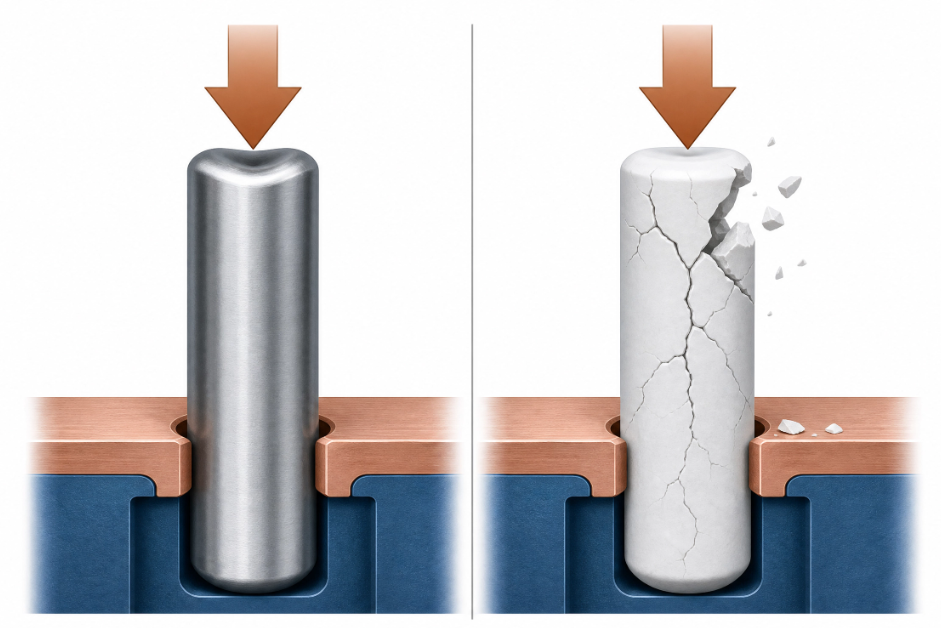
This is not just an analogy — it reflects the underlying physics. Metals fail in a ductile way: when overloaded, they yield and deform before they break, which gives both warning and energy absorption. Brittle materials fail in the opposite manner. A crack, once started at a surface flaw, propagates straight through with little resistance and no plastic deformation to slow it down. That is why a dropped ceramic pin can look fine and yet carry an invisible crack that finishes the job a few thousand cycles later, while a metal-cored pin that takes the same drop simply carries on. Understanding this single difference explains why the two materials wear out for completely different reasons, and why “which is more durable” has no answer until you know which kind of stress your line applies.
Where KCF Guide Pins Win
In our order book, the most common reason a customer moves from ceramic to the metal-cored pins is that ceramic pins keep breaking. Here is where the metal-cored design pulls ahead.
KCF Guide Pins Resist Impact and Don’t Shatter
This is the decisive advantage on most production lines. Ceramic is brittle by nature. Technical alumina, one of the most common locating-pin ceramics, has a fracture toughness in the range of only 4–6 MPa·m½, and it is prone to catastrophic failure under impact because it cannot deform to absorb energy the way metal does — a limitation documented in the engineering literature on alumina ceramics. On a busy line, pins get knocked by parts, fixtures, and operators. A ceramic pin that takes a sharp hit can chip at the corner or crack through, and when it fails it fails suddenly. The metal-cored alternative, with a tough core, absorbs those knocks and keeps working. For any line where pins see mechanical abuse — which is most of them — this alone settles the question.
The practical impact shows up in scrap rates and in the unpredictability of stoppages. A chipped corner on a brittle pin does not just end that pin’s life; it can leave a fragment in the fixture, mislocate the next part, and produce a defective weld before anyone notices. A metal-cored pin that gets dinged keeps its function and simply shows the wear, so problems announce themselves gradually rather than as a sudden bad batch. On automotive lines especially, where a single mislocated weld nut can mean a reworked or rejected body panel, the cost of a sudden brittle failure reaches far beyond the price of the pin itself. This is the reason impact resistance, more than any spec-sheet number, is the property that moves customers off ceramic.
KCF Guide Pins Can Be Machined and Resized to Drawing
The second major advantage is manufacturability. Ceramic cannot be freely machined; shapes are largely fixed at firing, and altering dimensions afterward is slow, limited, and risky. KCF guide pins start as a metal alloy, so they can be turned, profiled, and resized to a customer drawing with normal machining. When a fixture needs a non-standard diameter, a special tip profile, or a tweaked length, we can make it quickly. With ceramic, the same custom request means longer lead times and tighter design constraints. For shops with bespoke fixtures — and most nut and bolt welding fixtures are bespoke — this flexibility is a recurring, practical win.
KCF Guide Pins Offer Easier Assembly Tolerance
Customers also tell us ceramic pins are less forgiving during assembly: their hardness and brittleness make them fussy to seat, and hole alignment has to be near-perfect or the pin risks chipping on installation. The metal-cored pins, by contrast, tolerate the small real-world imperfections of assembly far better. A pin that survives a slightly imperfect insertion is a pin that does not generate scrap before it ever runs a cycle.
KCF Guide Pins Have Shorter Lead Times for Custom Work
Tied to machinability: because the metal-cored pins are machined rather than fired and ground, custom orders move faster. Ceramic custom work carries longer lead times and is harder to revise once tooling is committed. When a customer needs a fixture-specific pin without waiting weeks, the metal-cored route is simply more responsive.
The table below summarizes the practical advantages buyers cite when they choose KCF guide pins.
| Factor | KCF Guide Pins | Ceramic Pins |
|---|---|---|
| Impact / shock resistance | High — metal core absorbs knocks | Low — brittle, chips and shatters |
| Machinability / resize to drawing | Free machining, easy custom work | Largely fixed at firing, limited |
| Custom lead time | Short | Long |
| Assembly tolerance | Forgiving | Fussy, alignment-critical |
| Failure mode | Gradual surface wear | Sudden, catastrophic cracking |
Where Ceramic Pins Genuinely Win
A comparison that only praised our own preferred product would not be worth reading — or trusting. There are real conditions where ceramic is the better engineering choice, and we recommend it when those conditions apply.
Ceramic Pins Handle Higher Temperatures
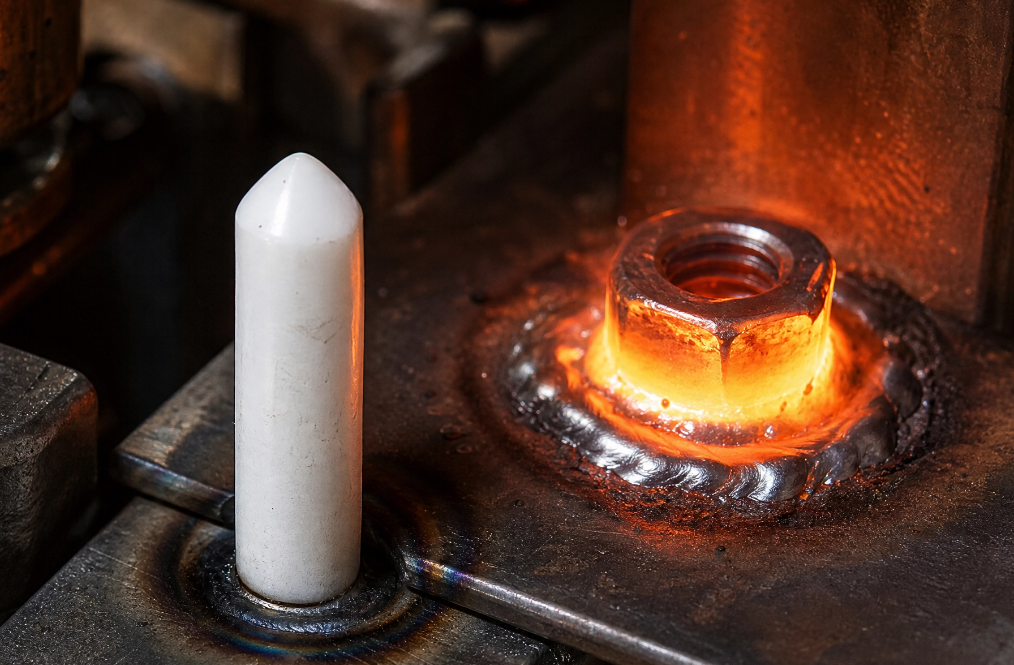
Ceramic’s standout property is heat tolerance. It retains its structure and insulation at temperatures that exceed what a metal-cored part is ideally suited for. On lines running unusually high heat input, or in positions sitting extremely close to the weld with sustained thermal load, ceramic’s superior temperature resistance can be the deciding factor. If your failure mode is heat-driven degradation rather than impact, ceramic deserves serious consideration.
Ceramic Pins Resist Brass and Dross Adhesion Better
The second genuine ceramic advantage is chemical: ceramic resists adhesion of brass and weld dross better than many surfaces. In applications where molten metal spatter and dross want to stick — and where that buildup fouls a locating pin — ceramic’s non-stick character keeps pins cleaner for longer. If you are constantly cleaning adhered material off your pins, ceramic may reduce that maintenance.
This matters more than it first appears, because adhered buildup does not only create cleaning work — it slowly changes the effective dimensions of the locating surface. A pin with brass progressively welding itself to the tip will start mislocating parts long before anyone schedules a cleaning, quietly eroding weld quality. On lines that weld brass components or heavily coated stock, where this adhesion is chronic, the cleaner-running ceramic surface can hold positional accuracy longer between interventions. That is a real, defensible reason to specify ceramic, and we say so plainly to customers whose process is adhesion-limited rather than impact-limited.
Ceramic Pins Offer Purer Bulk Insulation
Because a ceramic pin is non-conductive throughout its entire body, its insulation does not depend on a surface layer staying intact. There is no thin skin to wear through or machine away. In the most insulation-critical applications — or where a customer’s specification explicitly demands full-body non-conductivity — that bulk insulation is a real, defensible advantage. As covered in our guide to KCF material, damaging the surface layer of a metal-cored pin destroys its insulation; ceramic simply does not have that failure path.
The table below summarizes when ceramic is the right call.
| Condition | Recommended Choice | Why |
|---|---|---|
| Very high heat / sustained thermal load | Ceramic | Superior temperature resistance |
| Heavy brass / dross adhesion | Ceramic | Better non-stick chemistry |
| Spec demands full-body insulation | Ceramic | Insulation not dependent on a surface layer |
| Frequent mechanical impact | KCF guide pins | Metal core resists shattering |
| Bespoke / frequently revised fixtures | KCF guide pins | Free machining, fast custom turnaround |
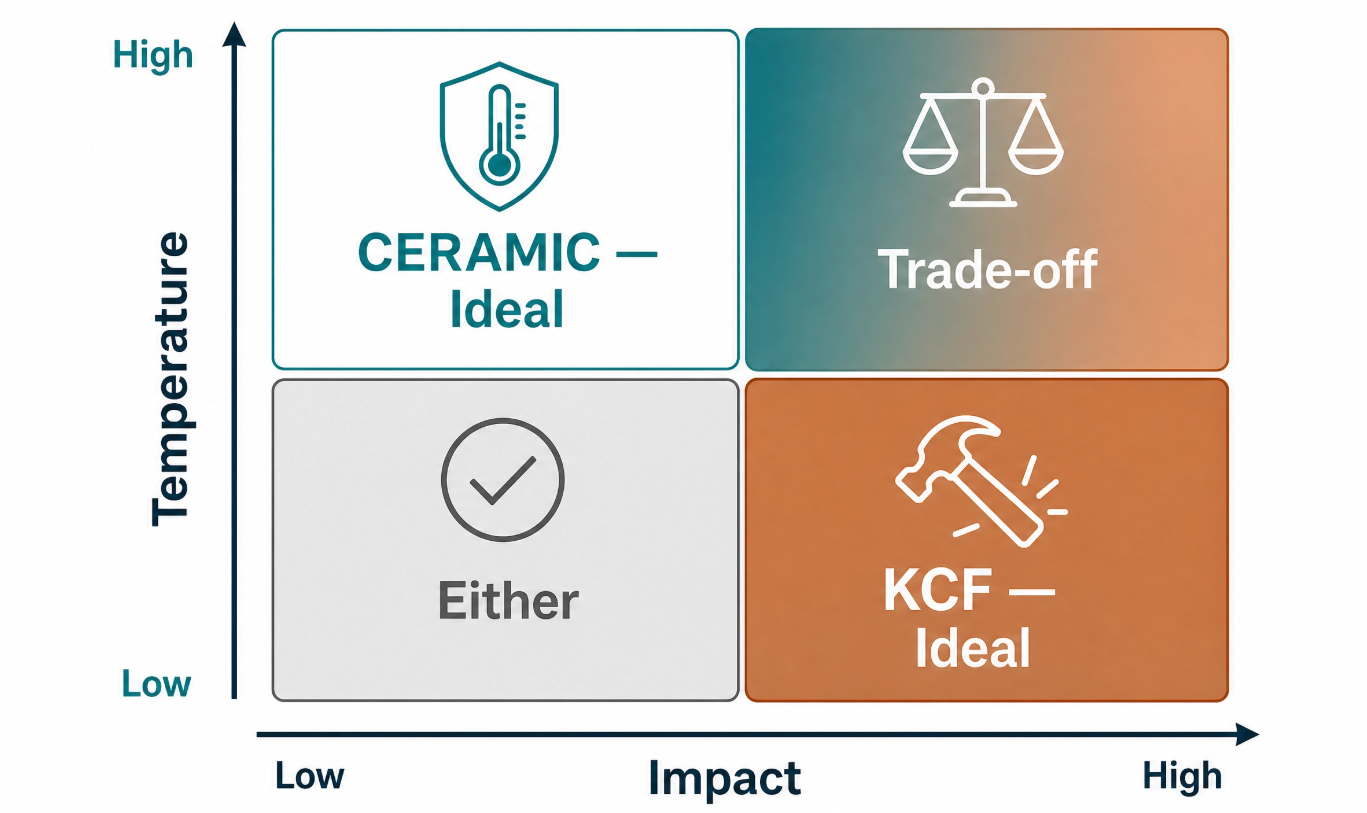
A pattern worth noticing in that table: the conditions favoring ceramic are all about the environment being chemically or thermally extreme, while the conditions favoring the metal-cored option are about the part being handled, knocked, and customized in the real world. Most lines live in the second world far more than the first. Genuinely extreme heat positions and chronic brass adhesion are real but comparatively narrow situations; impact, imperfect assembly, and bespoke fixtures are the daily reality of almost every nut and bolt welding cell. That is the underlying reason our order volume skews the way it does — not because one material is superior, but because the everyday stresses of production happen to be the ones the tougher, more machinable part handles best. When a customer’s situation sits in the narrow extreme-condition band, we route them to ceramic without hesitation, because sending them the wrong part to make a sale would only generate a complaint and a lost customer later.
KCF Guide Pins vs Ceramic: Which Lasts Longer Depends on the Failure Mode
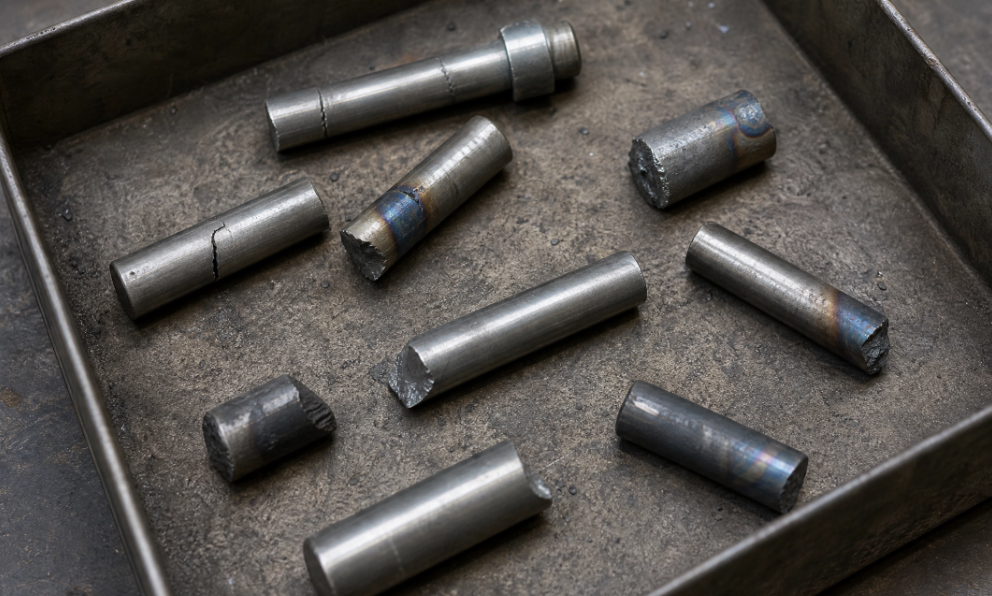
“Lasts longer” is the wrong question until you know how your current pins are dying. Service life is determined by whichever stress dominates your line:
- If pins are cracking, chipping, or shattering → impact is your dominant stress, and KCF guide pins will last dramatically longer because the metal core does not fail catastrophically.
- If pins are surviving impact but degrading from heat → thermal load dominates, and ceramic’s temperature resistance may give longer life.
- If pins are getting fouled by adhered brass or dross → adhesion is the issue, and ceramic’s non-stick chemistry can extend usable life between cleanings.
- If pins are simply wearing at the surface over time → this is normal abrasive wear, and here the metal-cored pins shine, because a worn pin degrades gradually and predictably rather than failing without warning.
The single most useful diagnostic is your scrap bin. Pull your failed pins and look at them. Clean breaks and chipped corners point to the metal-cored pins. Heat discoloration and thermal cracking, or heavy adhered buildup, point to ceramic. The material that wins is the one that solves the failure you actually have.
For background on why brittle materials like alumina fail the way they do under load, Morgan Technical Ceramics’ overview of ceramic mechanical properties is a clear, authoritative reference on fracture toughness and crack behavior.
KCF Guide Pins and Ceramic: Total Cost of Ownership Beyond Unit Price
Buyers often compare ceramic and KCF guide pins on unit price alone, but that number rarely reflects real cost. The figure that matters is cost per thousand cycles, which folds in replacement frequency and — crucially — the downtime each failure causes.
A ceramic pin that shatters mid-shift does not just cost a pin; it costs a line stop, an unplanned changeover, and potentially scrapped parts from the cycle that went wrong. A KCF guide pin that wears gradually can be scheduled for replacement during planned maintenance, with no surprise stoppage. On a high-volume automotive or appliance line, that predictability is often worth more than any difference in piece price. When you tally the true total cost of ownership, the part that fails predictably usually wins on lines where impact is present — which is the majority.
Consider a simple illustration. Suppose ceramic pins cost less per piece but fail unpredictably twice a month, each failure stopping a line that bills hundreds of dollars per minute of downtime. Suppose the metal-cored alternative costs more per piece but is replaced on a planned schedule with zero unplanned stops. Within a single month, the downtime avoided typically dwarfs the difference in pin price many times over. We are not claiming the metal-cored option is always cheaper — on a low-volume bench operation where a stoppage costs almost nothing, the unit price may well dominate and ceramic could be the economical pick. The point is that the right comparison is never “which pin is cheaper to buy,” but “which pin is cheaper to run on my line, including the cost of how it fails.” That reframing is what separates a purchasing decision from a true engineering decision, and it is the conversation we try to have with every customer weighing the two.
How to Choose Between KCF Guide Pins and Ceramic: A Practical Path
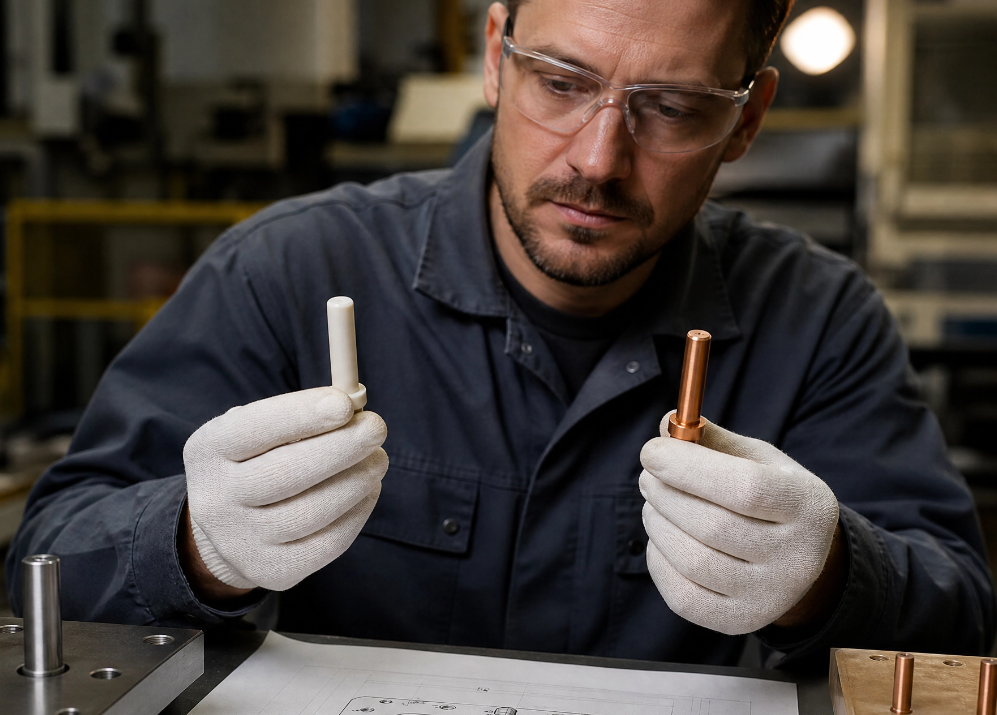
Use this sequence on your own line:
- Inspect your failed pins. Cracks and chips → lean toward the metal-cored pins. Heat damage or adhesion → lean ceramic.
- Characterize the environment. Note heat input, proximity to the weld, and whether you weld brass or coated stock.
- Assess your fixtures. Standard and stable → either works. Bespoke or frequently revised → the metal-cored pins for machinability and lead time.
- Weigh downtime cost. High-volume line where a sudden stop is expensive → favor the predictable wear of the metal-cored pins.
- Confirm any spec constraints. If a customer or standard mandates full-body insulation, ceramic is required regardless of the above.
In our experience, this path sends most general nut and bolt welding lines toward KCF guide pins for their impact resistance, machinability, and predictable wear — while correctly routing the genuinely heat- or adhesion-limited applications to ceramic. Both are legitimate; the right one is the one that matches your dominant stress.
One more piece of practical advice: do not switch your entire line at once. When a customer is unsure, we suggest running a small trial set of the candidate material in the most demanding positions on the line for a few weeks, alongside the incumbent. Real production is the only honest test bench — it applies the exact combination of heat, impact, and chemistry that no spec sheet fully captures. After a short trial you will have your own failed parts to inspect, and the decision usually makes itself. This is also why we are comfortable selling either material: a customer who trials honestly ends up with the part their process actually rewards, and that is the customer who reorders. A pin chosen by trial rather than by sales pitch is a pin that stays chosen.
Final Thoughts on KCF Guide Pins vs Ceramic
The KCF guide pins versus ceramic decision is not about which material is “better” in the abstract — both are good at what they are built for. It is about matching the part to the failure mode on your specific line. KCF guide pins win on impact resistance, machinability, custom lead time, assembly tolerance, and predictable wear, which is why they suit most production environments. Ceramic wins on extreme heat, brass and dross resistance, and pure bulk insulation, which makes it the right specialist choice when those conditions dominate.
Because we make both, the most useful thing we can do is look at your situation rather than sell you a default. If you send us a few of your failed pins and a description of your line — heat, cycle rate, what you are welding — we can tell you which material your own evidence points to. That diagnosis, not a catalog preference, is how you end up with pins that actually last.
A final word for buyers who inherited a pin choice they never questioned. Many lines run a material simply because that is what the line was built with years ago, not because anyone tested the alternative. If your current pins are failing in a way that frustrates you, that frustration is data: it is telling you which stress dominates, and therefore which material your line has been asking for all along. The switch is rarely complicated, the trial is cheap, and the payoff — fewer surprise stoppages, less scrap, steadier weld quality — compounds shift after shift. The decision is worth making deliberately rather than inheriting by default.

About the Author Written by Kara, CEO and Lead Production Expert at Spot Welding Parts. With 26 years of front-line experience in industrial manufacturing, Kara oversees the engineering and machining of precision resistance welding consumables. She works directly with global automotive tier-1 suppliers and sheet metal fabricators to optimize electrode life, resolve stray current issues, and build reliable custom KCF tooling.
Share This Article
Latest Articles
October 19, 2026
October 19, 2026
October 19, 2026
October 19, 2026
October 19, 2026
October 19, 2026
October 19, 2026
October 19, 2026