
How to Choose a Spot Welding Parts Supplier: A Complete Buyer’s Checklist for International Buyers

We are a spot welding parts supplier, so let us start with the obvious: an article like this, written by a factory, could easily be a sales pitch wearing a checklist costume. We are going to try hard not to write that article. Instead, this is the vetting process we would use if we were the buyer — built from years of watching overseas customers arrive at our door after being burned elsewhere, and from knowing exactly which corners a dishonest vendor in our industry can cut without you noticing until the caps start failing.
The three mistakes we see most often from international buyers are remarkably consistent: they cannot tell a real factory from a trading company and pay a middleman markup without knowing it; they choose the lowest quote and discover what was removed from the product to hit that price; and they never verify the material, accepting that a shiny cap stamped “CuCrZr” is what the label claims. Every section below exists to make one of those mistakes — or a close cousin — impossible to repeat.
Why Choosing the Right Spot Welding Parts Supplier Matters More Than the Quote
Welding consumables look like commodities, which tempts buyers into treating sourcing as a price-sorting exercise. But these parts sit at the exact point where your product’s quality is created. A locating pin out of tolerance mislocates every nut it touches. An electrode cap made of mislabeled alloy softens early, and your weld quality drifts with it. The purchase price of these components is a rounding error next to the production they control — which means the real risk in this category is never the quote, it is the gap between what was promised and what arrives in the box.
That gap is precisely what a vetting process measures. The rest of this checklist is organized as five verification steps, followed by the red flags that should end a conversation immediately.
One more framing point before the steps: vetting a supplier is cheapest at the start and most expensive after dependence. Once a vendor’s parts are qualified on your line, parameters tuned around them, and inventory built on their lead times, switching carries real friction — requalification trials, retuning, dual-stocking through the transition. Dishonest vendors understand this perfectly, which is why corner-cutting so often begins on the second or third order rather than the first: the hook is set, and they are betting the switching cost will make you tolerate the decline. The verification habits below are not only for choosing a supplier — kept alive at low intensity throughout the relationship, they are what makes that bet a losing one.
Step 1: Confirm Your Spot Welding Parts Supplier Is a Factory, Not a Trading Company
The single most common trap. A trading company presents itself as a manufacturer, quotes you a price with its margin stacked on the real factory’s price, and inserts itself permanently between you and the people who actually control your quality. Some trading companies are honest about what they are and add genuine value in communication and consolidation. The problem is the ones that pretend — because when a quality issue surfaces, you discover your “manufacturer” has no machines, no engineers, and no ability to fix anything except by forwarding your email.
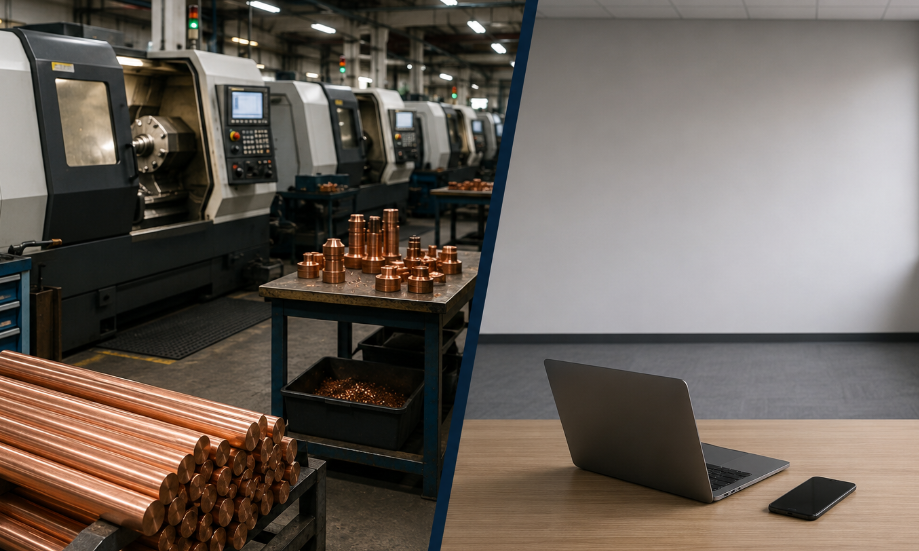
How to tell the difference in practice:
- Ask for a video factory tour, live. Not a produced marketing video — a phone walking through the workshop on a video call, today. A real maker can do this in an hour. A reseller cannot.
- Ask machine-level questions. What turning centers run the caps? What is the heat treatment cycle for the alloy? A factory’s salesperson can get an engineer on the line; a middleman goes quiet or vague.
- Ask for photos of a specific part of the process — the bar stock storage, the heat treatment furnace, the QC bench. Watermarked stock photos and images that reverse-search to other websites answer the question for you.
- Check the business scope on the company’s registration if you want documentary evidence; manufacturing scope and trading scope read differently.
| Signal | Genuine Factory | Disguised Trading Company |
|---|---|---|
| Live video tour of workshop | Offered readily | Deflected, delayed, “policy” excuses |
| Engineer available for technical call | Yes, with real process answers | Vague, scripted, or unavailable |
| Photos of specific process steps on request | Provided quickly, consistent style | Stock images, inconsistent, watermarked |
| Custom / non-standard parts to drawing | Quoted with technical questions back | Quoted instantly with no questions |
| Price structure | Direct, explainable | Carries an unexplained layer |
One nuance from our side of the fence: a factory that asks you questions about your drawing — tolerances, duty cycle, fixture details — is showing you its engineering is real. An instant quote on a non-standard part with zero technical questions usually means nobody technical ever saw your drawing.
It is also worth understanding why the middleman markup matters beyond the money, because some buyers shrug at a percentage they never see itemized. The markup is the smaller cost. The larger cost is structural: every technical question you ask now travels through a relay who does not understand it, every quality complaint gets softened or reframed before it reaches anyone who can act, and every commitment about lead time or material is made by a party with no control over either. When your line is down and you need to know whether replacement caps can ship this week, you are negotiating with someone whose only tool is forwarding your urgency to a factory that has never heard your name. Buyers who have lived through one such episode tend to become permanent factory-direct converts — not over price, but over the experience of finally talking to the people who hold the answers.
There is one legitimate exception worth naming honestly: a transparent sourcing agent who openly states they are an agent, charges a declared fee, and connects you to a named factory you can verify yourself. That model can genuinely help small buyers consolidate shipments and bridge language gaps. The trap is never the agent who says “I am an agent” — it is the one whose website says “our factory.”
Step 2: Verify the Material Before Trusting Any Spot Welding Parts Supplier
The dirtiest secret in this product category is material substitution. “CuCrZr” on a quote costs nothing to type. Genuine chromium zirconium copper — properly alloyed, properly aged — costs real money to produce, and the difference is invisible to the eye. A cap machined from cheaper copper looks identical on arrival and reveals itself only weeks later as mushrooming and short life on your line. The RWMA classification system exists precisely so buyers can specify alloys unambiguously; the AWS RWMA Resistance Welding Manual defines the material classes and what each must deliver.
What verification looks like in practice:
- Request a material certificate / alloy composition report with the order. A factory working with honest material has these as a matter of routine, because its own bar stock arrives with them. Hesitation here is informative.
- Spot-check independently if the volume justifies it. A composition analysis on a sample cap is inexpensive relative to a container of consumables, and the mere fact that you test changes supplier behavior.
- Be suspicious of dramatic price gaps for “the same” alloy. Copper alloy prices track metal markets; everyone buys raw material in the same world. A quote far below the cluster is not a negotiating victory — it is a different bill of materials wearing the same name.
We provide composition reports with our material because we buy certified bar stock and the paperwork already exists. Any honest maker can say the same, which is exactly why a refusal tells you so much.
A practical note on reading those reports: a composition certificate is only as good as its chain of custody. The strongest version traces from the bar stock mill certificate through the production batch to your shipment — ask whether the report describes your batch or is a generic document for the alloy grade. The difference matters, because a generic data sheet proves the alloy exists, while a batch-linked report proves you received it. Buyers sourcing for automotive or appliance customers with their own audit obligations will find the batch-linked version is also what their downstream paperwork eventually demands, so insisting on it early saves a scramble later.
Step 3: Test Your Spot Welding Parts Supplier With a Sample Order First
No amount of documentation substitutes for parts on your own line. A small sample order is the cheapest insurance in this entire process: it tests the product, the communication, the packaging, and the gap between promise and box, all for the cost of a trial batch.
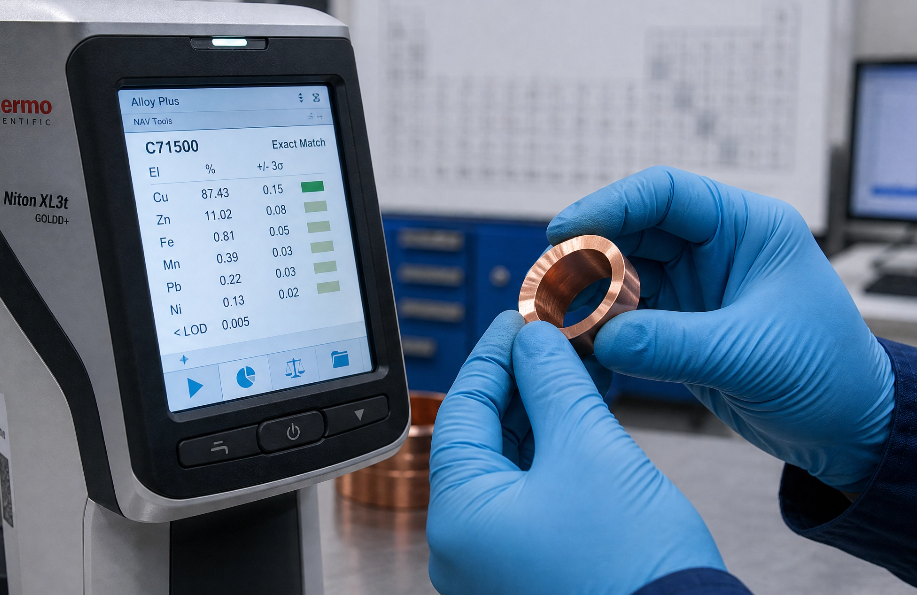
Run the sample seriously: put the caps or pins on a working gun, log weld counts as described in our guide to the 7 causes of premature electrode wear, and compare against your incumbent under the same conditions. Two cautions from our experience on the receiving end of these trials:
- Test enough pieces to mean something. Two caps prove little; a small batch across a couple of stations produces a real comparison.
- Hold conditions constant. A trial run during a line speed change or a material switch tells you nothing about the parts.
And one caution about a practice we consider a red flag elsewhere in this article: some vendors send golden samples — hand-picked or even specially made pieces that outperform what production batches will deliver. The defense is simple: make clear the first volume order will be checked against the sample’s performance, and consider an independent check on that first shipment. The pre-shipment inspection services offered by SGS and similar third-party bodies exist for exactly this purpose, and a serious manufacturer will not flinch at the suggestion.
What should a sample order actually contain? Our recommendation to buyers vetting any supplier, including us: order the exact items your line consumes most — not the vendor’s showcase product — in a quantity that covers at least one full wear cycle per test station. Include one custom item from your own drawing if customization will matter to the relationship, because the sample phase is also your only low-stakes chance to test how the supplier handles a drawing: the questions asked, the tolerance discussion, the revision turnaround. A vendor that shines on catalog items and stumbles on your drawing has told you where its limits are before any money was at risk.
Step 4: Check the Trust Signals a Real Spot Welding Parts Supplier Can Offer
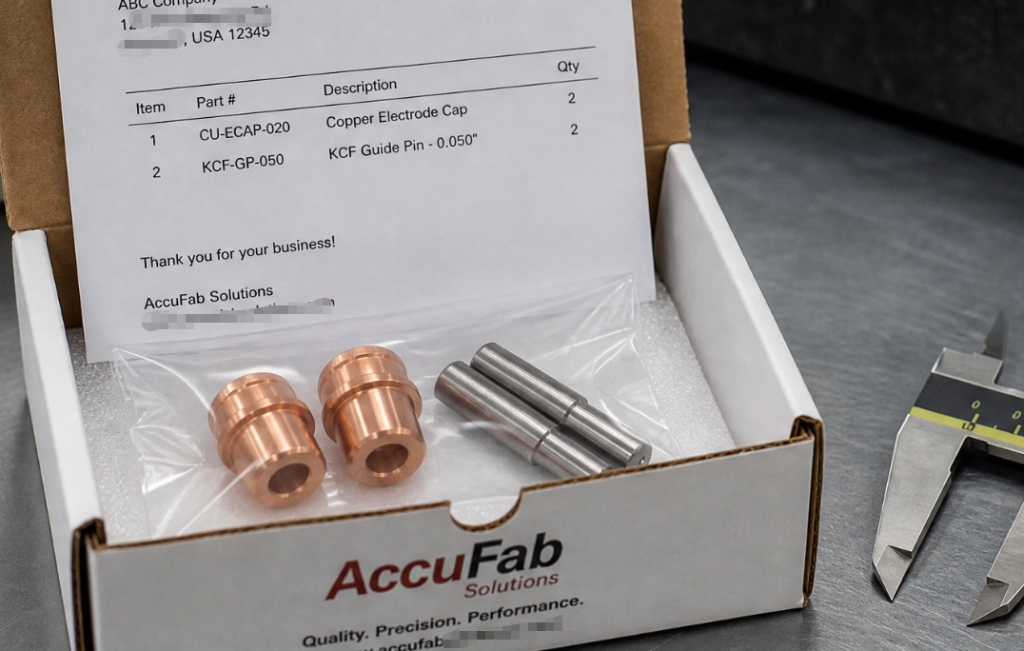
Across years of being vetted by careful buyers, these are the verifications we consider reasonable for any buyer to request — because we accept them ourselves, and because each one is hard for a dishonest vendor to fake:
- A small trial order with no pressure toward volume. Real factories accept small first orders because they expect the product to win the relationship.
- A live or third-party factory audit. Video walkthrough on short notice, or a third-party audit firm visiting in person. Accepting scrutiny is itself the signal.
- Material certificates and composition reports delivered with goods, not promised after payment.
- Genuine custom capability. Send a non-standard drawing and watch what happens. Technical questions back means engineers exist; a too-fast yes means they do not.
- Evidence of repeat business. Reorder records and long-running customer relationships (anonymized as needed) are hard to counterfeit at scale. New customers ask us for these regularly, and the pattern of repeat orders says more than any certificate.
None of these is exotic. The point of the list is the response it provokes: a capable manufacturer treats these requests as routine business, while a vendor with something to hide treats them as obstacles to negotiate away.
Step 5: Supplier Red Flags That Should End the Conversation
From the factory side, we watch competitors come and go, and the ones that burn buyers share a recognizable signature. These five signals warrant ending discussions regardless of price:
| Red Flag | What It Usually Means |
|---|---|
| Quote dramatically below the market cluster | Material substitution — the price is honest about the metallurgy even when the label is not |
| Refuses video tour / workshop access | There is no workshop, or not the one implied |
| Claims to make everything | A reseller’s catalog, not a manufacturer’s specialty; nobody tools up for every product category |
| Sample quality ≠ volume quality | Golden samples; the production line you are actually buying from is a different reality |
| No authentic factory photos — only stock or web images | The “factory” exists as a website |

The “makes everything” flag deserves a sentence, because it looks like convenience: one vendor for caps, pins, feeders, cables, fixtures, and a thousand unrelated items. Real manufacturing requires specific machines, specific tooling, and process knowledge that takes years per product family. A company claiming unlimited scope is describing its sourcing network, not its workshop — which makes it a trading company in factory clothing, and returns you to Step 1.
Notice also that these red flags compound. Any single one might have an innocent explanation — a supplier mid-relocation might genuinely struggle to host a tour this month. Two together start forming a pattern. Three or more is a verdict. The buyers who get burned are rarely the ones who missed a subtle signal; they are the ones who saw two or three loud signals and let an attractive price argue them down. Price is the one piece of information a dishonest supplier controls completely, which is exactly why it should never outvote the evidence you gathered independently.
What a Good Spot Welding Parts Supplier Relationship Actually Looks Like
It is fair to ask what we think differentiates a good source once the fakes are filtered out — and fair for you to read this section knowing we are describing ourselves. Calibrate accordingly; every claim here is checkable through the verifications above.
Technical support that diagnoses before it sells. The best question a maker can ask a buyer is “what is failing and how?” — because correct diagnosis sometimes means less product, not more. When a customer’s electrode consumption traces to a blocked cooling line, the honest answer is to fix the water, not ship more caps. The same diagnostic mindset applies to material selection: our comparison of KCF versus ceramic guide pins exists precisely because the right answer differs by failure mode, and a source that helps you select and troubleshoot is buying the relationship, not the order.
Lead times that are stated honestly and kept. Fast matters, but stable matters more. A quoted lead time a factory actually hits lets you run lean inventory; an optimistic one that slips forces you to over-stock defensively, which silently erases whatever the price saved.
Flexible minimums. Low MOQ is not generosity — it is confidence. A maker that accepts small orders is betting its product quality will earn the reorder. High rigid minimums from an unproven source transfer all the risk to you.
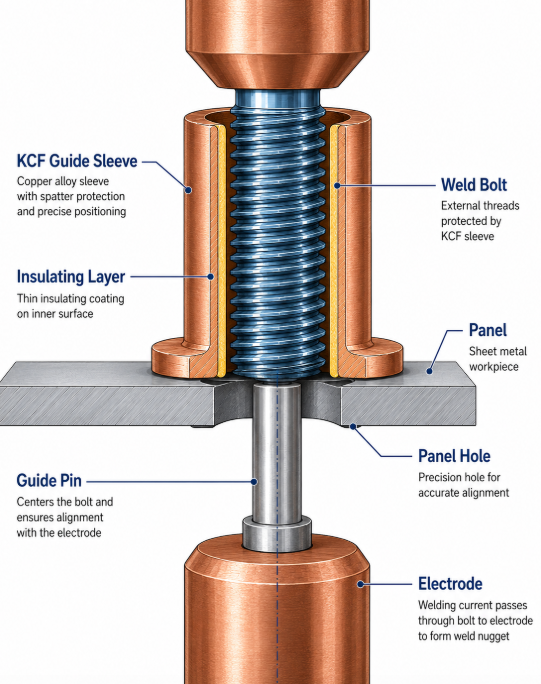
Owning the differentiated material. In our niche, the KCF insulated alloy behind our guide pins is produced in-house rather than resold, which means the material’s quality, consistency, and specification sit under the same roof as the machining. Whatever the equivalent differentiator is for the vendor you are vetting — ask whether they make it or buy it, because that answer defines who actually controls your quality.
A closing observation on relationships versus transactions. The vetting process above is front-loaded work, and some buyers ask whether it is worth the effort for “just consumables.” Our answer comes from watching what happens after the vetting: buyers who verified thoroughly almost never churn, because the verified relationship keeps paying — stable quality means stable parameters on their lines, predictable lead times mean lean inventory, and a maker who knows their fixtures answers technical questions in hours instead of days. Buyers who skipped the vetting churn constantly, paying the switching cost over and over: requalification trials, parameter retuning, the occasional bad batch mid-contract. The checklist takes a week. The churn cycle costs a week every few months, forever. That arithmetic is the real argument for doing this properly once.
A Compressed Checklist for Vetting Any Spot Welding Parts Supplier
For your sourcing file, the whole article in nine questions. Print it, attach it to every candidate’s folder, and require a written answer or observed result for each line before any volume commitment — partial passes are how attractive prices talk buyers past their own evidence:
- Live video tour of the workshop — offered or dodged?
- Can an engineer discuss your drawing’s tolerances and process?
- Does the business registration show manufacturing scope?
- Material certificate / composition report provided with goods?
- Is the quote inside the market cluster, or suspiciously below it?
- Small sample order accepted without volume pressure?
- Sample trial run on your line, logged, under constant conditions?
- First volume order independently inspected against the sample?
- Evidence of repeat customers and reorders?
A source that passes all nine is worth a relationship. A source that fails the first two is not worth a third email.
Final Thoughts on Choosing a Spot Welding Parts Supplier
Vetting a spot welding parts supplier is not about finding a perfect company; it is about replacing trust with verification until trust is earned through delivered orders, kept lead times, and consistent material — the only currencies that count in this business. Every honest manufacturer in this industry can pass the checks above without friction, because the checks only filter out pretense: fake factories, fake alloys, fake samples. That is why we are comfortable publishing the playbook — it costs us nothing and costs the pretenders everything.
If you are sourcing welding consumables now, run this checklist on every candidate — including us. Send a non-standard drawing and see who asks questions. Request the video tour and watch who offers a time slot versus who offers excuses. Ask for a batch-linked material report and note who treats it as routine. The vendors’ responses will sort themselves faster than any comparison spreadsheet, and the one you keep will be a source you verified rather than one you hoped about.

About the Author Written by Kara, CEO and Lead Production Expert at Spot Welding Parts. With 26 years of front-line experience in industrial manufacturing, Kara oversees the engineering and machining of precision resistance welding consumables. She works directly with global automotive tier-1 suppliers and sheet metal fabricators to optimize electrode life, resolve stray current issues, and build reliable custom KCF tooling.
Share This Article
One Comment
Leave A Comment
Latest Articles
October 20, 2026
October 20, 2026
October 20, 2026
October 20, 2026
October 20, 2026

October 20, 2026
October 20, 2026
October 20, 2026
[…] you’re still choosing a supplier, see our guides on how to choose a spot welding parts supplier and OEM factory vs trading company. This article assumes you’ve chosen and are ready to […]