KCF Alloy Rods: From Raw Rod to Finished Insulated Part

A KCF alloy rod is the raw form of KCF — the round bar stock from which insulated guide pins, sleeves, and bushings are machined. If the finished KCF pin is the part that locates a nut on a welding line, the rod is where that part starts: a special alloy supplied as bar stock, machined into shape, and then heat-treated so its surface forms the insulating layer that makes KCF what it is. We manufacture KCF bars ourselves, which means we supply the rod as a product in its own right — to shops that machine their own parts, to distributors, and as the feedstock for the finished pins and sleeves we machine in-house. This guide covers the KCF rod as a product in its own right: what it is, the journey from rod to insulated part, who buys rods and in what state, the supply options available, and when it makes sense to buy rods versus finished parts — so you can order the form that fits your process.
For the material science behind KCF, see what KCF alloy is; for evaluating rod specifications in detail, our guide to KCF alloy rod specifications covers the parameters. This article is about the rod as a purchasable product and how it becomes a part.
What a KCF Alloy Rod Is
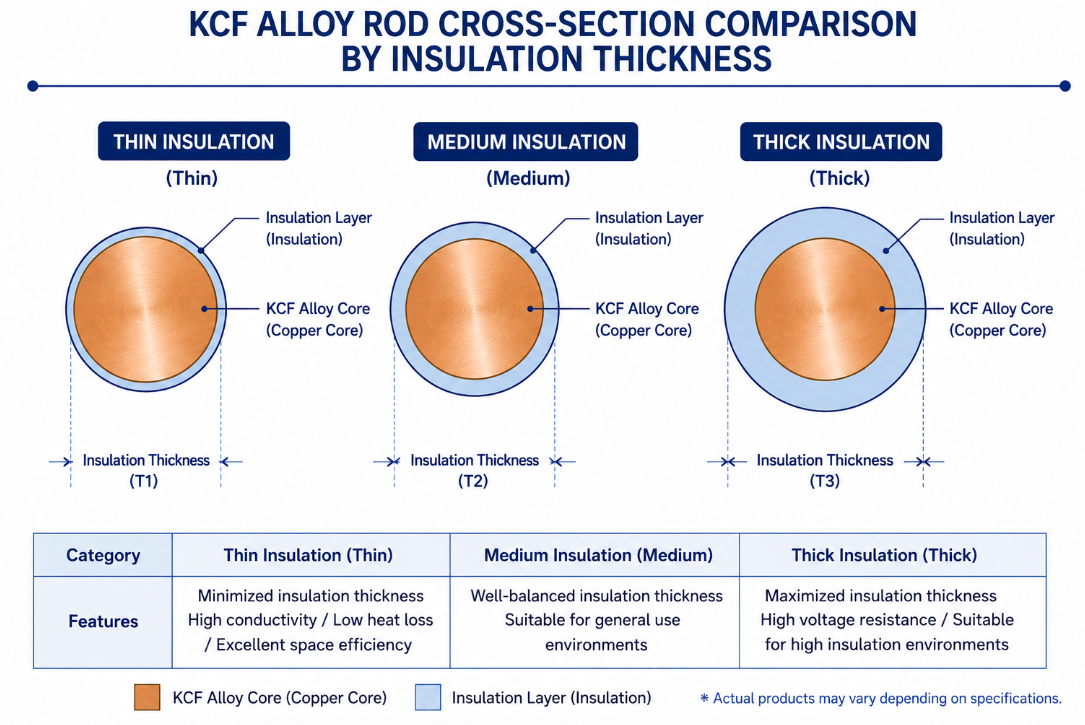
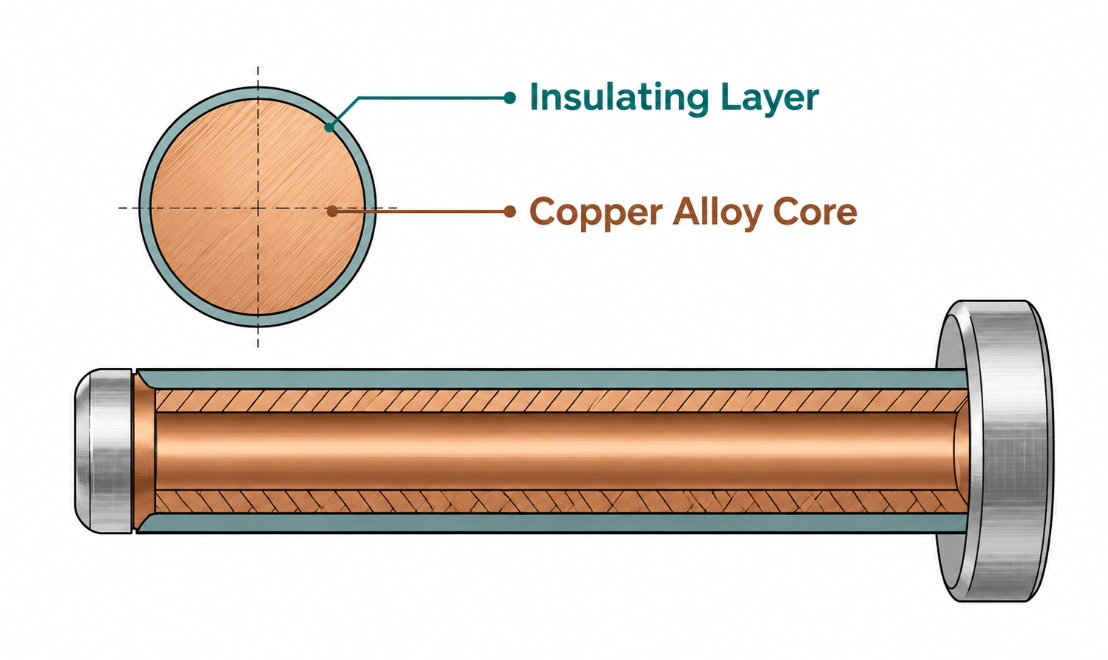
KCF rod is round bar stock of the KCF alloy — a special metal material whose defining trick is that, when heat-treated, its surface forms a thin, high-quality insulating layer (on the order of 8–15 μm) that bonds tightly to the alloy beneath. Crucially, this is not a coating applied onto the metal: it is an insulating skin formed from the material itself by the treatment, which is why it does not peel the way an applied coating can. The treated material carries three functions at once — electrical insulation, wear resistance, and oxidation resistance — on a tough metal core.
The rod is how this material is supplied for making parts. Machined into pins, sleeves, bushings, and other shapes, and then treated, KCF rod becomes the insulated locating parts used throughout resistance welding — the guide pins that position nuts and bolts, the sleeves that insulate and locate. Demand for these parts is substantial: welding locator pins must be electrically insulating to prevent arcing, and projection welding equipment is the biggest consumer of welding pins, which is exactly the application KCF rod feeds. The rod exists as a product because so many different pin and sleeve geometries are machined from it.
The Rod-to-Part Journey: Machine First, Then Insulate
The most important thing to understand about KCF rod — and what makes it distinctive as a raw material — is the order of operations. A KCF part is not machined from already-insulated stock. The sequence runs the other way:
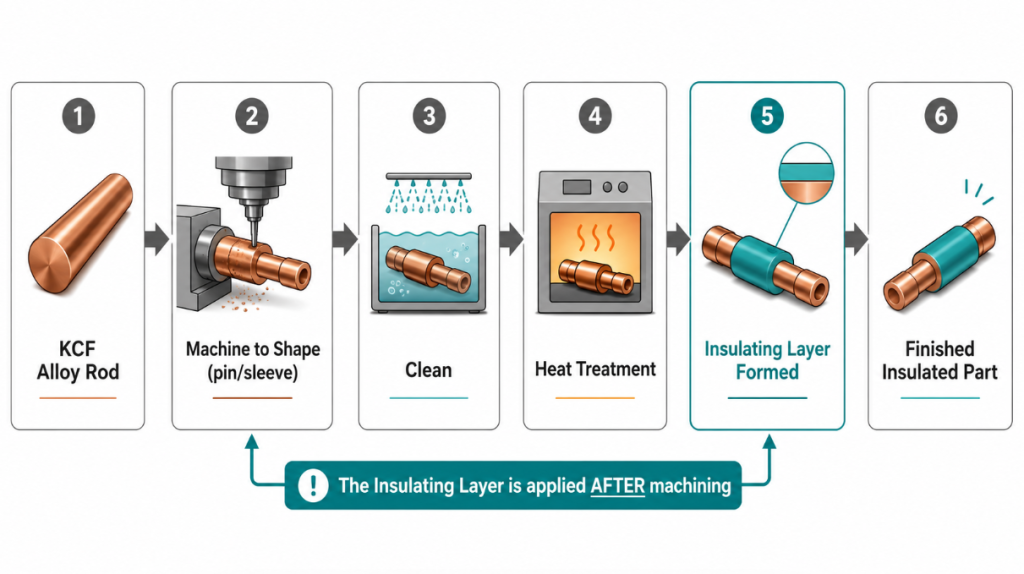
First, machine. The rod, in its alloy state, is machined into the part — the pin, sleeve, or bushing shape, with its diameters, steps, and features cut by ordinary machining. In the alloy state the material machines readily, which is what allows KCF parts to be made quickly in any shape, standard or custom.
Then, clean and heat-treat. The machined part is cleaned and heat-treated, and it is this treatment that forms the insulating layer over the part’s surface. The finished geometry goes into the treatment; the insulated part comes out — the layer forming on the shape you machined, covering the part’s surfaces.
This machine-first, insulate-second order is not arbitrary. The insulating layer is a thin surface feature; machining after the layer formed would cut through it, destroying the insulation exactly where the tool touched. Forming the layer after machining means the insulation covers the finished surfaces intact. The approach — a metallic core whose insulating surface is produced by an oxidizing heat treatment — is an established way to make insulated metal-core guide pins, combining metal toughness with an insulated surface.
For anyone buying rod, this journey defines what you’re buying: stock that machines like metal, plus a treatment step that turns your machined shape into an insulated part. Which leads directly to the question of what state the rod should be in when it reaches you.
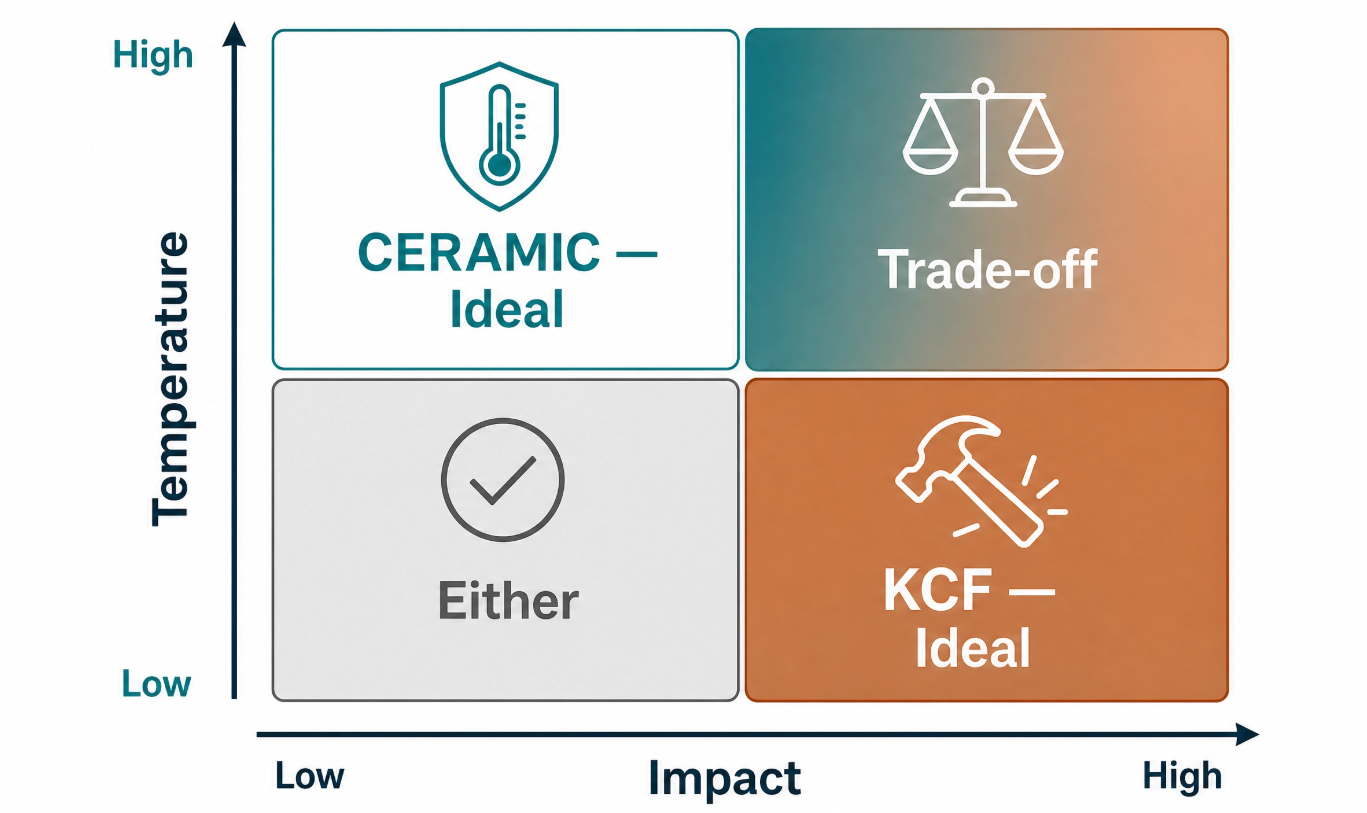
The order of operations also explains one of KCF’s most practical advantages as a material: speed and freedom of shape. Because the shaping happens by ordinary machining on alloy-state stock, any geometry a lathe or mill can cut, KCF can become — quickly, and in quantities from one piece up. Compare this with all-ceramic locating parts, which must be formed and fired to shape, making unusual geometries slower and more involved to produce. With KCF, a custom pin geometry is a machining job followed by a treatment, which is why custom and non-standard KCF shapes can be turned around fast. For a rod buyer, that machinability is the material’s promise: the bar on your shelf can become whatever locating part tomorrow’s job needs.
Who Buys KCF Rods — and Why
KCF rod serves three kinds of buyers, and knowing which you are shapes what to order.
Shops machining their own parts. If you have machining capability and make your own locating parts — your own pin geometries, your own replacements — rod is your feedstock. Buying rod gives you stock on the shelf and the freedom to machine whatever geometry your line needs, when it needs it. This is the classic rod buyer: the shop that wants the material, not the finished part.
Distributors and trade buyers. Distributors and industry peers purchase rod as the upstream material for their own supply of KCF parts — buying the alloy from the manufacturer and machining or reselling downstream. As a bar manufacturer, we supply this trade demand directly. For a trade buyer, sourcing from the bar manufacturer itself matters: the supply chain is one step, the material’s origin is first-hand, and questions about the alloy go to the people who actually made it.
Buyers of finished parts (who don’t need rod at all). Many customers don’t want rod — they want finished pins and sleeves, made and treated, ready to install. For them, the rod is our feedstock, not theirs: we machine their parts from our own bar in-house. Knowing this option exists matters even to rod buyers, because the choice between rod and finished parts is a real decision (more below).
Table 1 — Who Buys KCF Rod
| Buyer | What They Want | What to Order |
|---|---|---|
| Machining shops | Feedstock for their own parts | Rod, sized to their machining |
| Distributors / trade | Upstream KCF material supply | Rod in volume |
| Finished-part buyers | Ready-to-use pins & sleeves | Finished parts, not rod |
The table’s point is that rod is one of two ways to get KCF parts — make them yourself from rod, or buy them finished. Both start from the same bar; the difference is who does the machining and treating.
Supply States: Alloy-State, Treated, or Treated-for-You
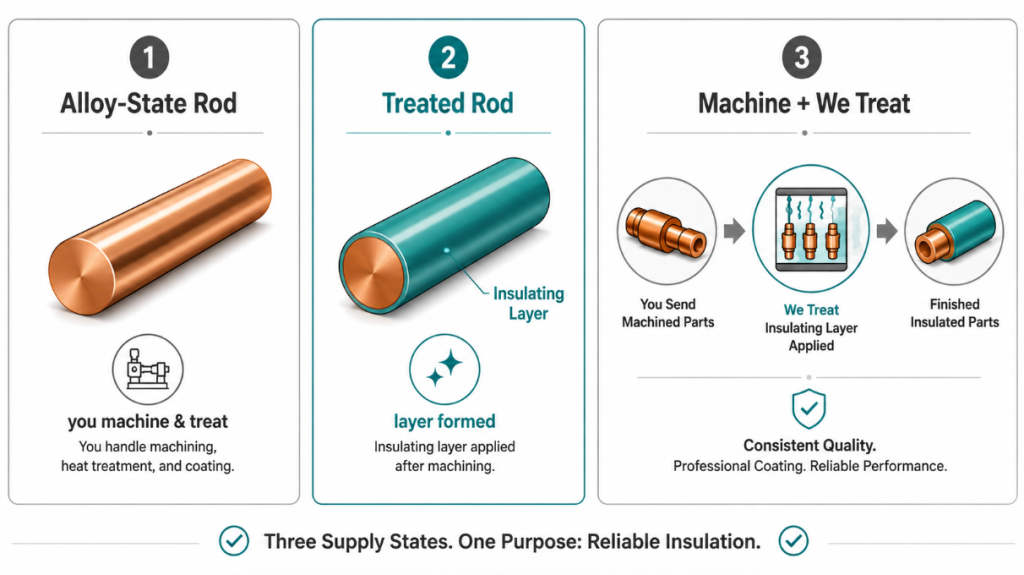
Because the insulating layer is formed by treatment, KCF rod can be supplied in more than one state — and matching the state to your process is part of ordering well.
Alloy-state rod (machine, then treat). Rod supplied in the alloy state, ready for machining. You machine your parts, then the parts are heat-treated to form the insulating layer. This is the natural state for buyers who machine their own geometries — the material arrives machinable, and the insulation comes after shaping.
Rod with the insulating layer formed. Rod can also be supplied already treated, with the insulating layer formed on its surface. This suits uses where the rod’s treated surface itself serves the purpose — applications using the stock form directly, or buyers who want treated material on hand.
Treatment as a service. For buyers who machine their own parts but don’t run the treatment themselves, we can perform the heat treatment — you machine, we treat, and your parts come back with the insulating layer formed. This closes the gap for shops with machining capability but not the KCF treatment process, letting them make their own geometries and still get properly insulated parts.
Table 2 — KCF Rod Supply States
| State | What You Get | Who It Suits |
|---|---|---|
| Alloy-state rod | Machinable bar; treat after shaping | Shops machining their own parts |
| Treated rod | Bar with insulating layer formed | Uses needing treated stock |
| Machine + we treat | Your parts, our treatment | Shops without the treatment process |
The three states cover the range of buyer situations: full make-your-own, treated stock, and the hybrid where you machine and we insulate. Tell us your process, and the right state follows.
Supply Options: Sizes, Cutting, Certification
Beyond state, ordering rod comes down to a few practical supply options.
A range of diameters, plus custom. Rod is available across a range of standard diameters to suit different part sizes — small-diameter stock for slender pins, larger stock for sleeves and bushings — and special diameters can be made to your requirement. The diameter you order follows from the parts you’ll machine: choose stock close to your largest finished diameter to minimize machining waste.
Cut to length. Rod comes in standard bar lengths and can be cut to the lengths you need — whether that’s full bars for your saw, or pieces cut to suit your parts and your machines. Cutting to length saves you a processing step and ships you material ready for the chuck.
Material certification. Rod is supplied with material certification on request, documenting what the material is — the assurance that the bar in your shop is genuine KCF alloy that will form its insulating layer when treated. For a material whose key property only appears after treatment, certification of the alloy itself is worth having. Quality documentation can accompany the order — QC reports provided before delivery — so what arrives is verified before it ships, not just after it’s machined.
Custom to your specification. Diameter, length, quantity, and state — the rod order is built to your specification, because rod buyers’ needs vary as widely as the parts they make. From single bars to volume supply, the order follows your requirement.
Rods vs Finished Parts: Which Should You Buy?
Since we supply both the rod and the finished parts machined from it, we can lay out the decision honestly rather than steering you either way.
Buy rod when you have machining capability and want control — your own geometries, your own timing, stock on your shelf. Rod suits shops that make many or changing pin geometries, that want to turn parts same-day from stock, or that supply parts onward themselves. Pair alloy-state rod with your own treatment, or use our treatment service after your machining.
Buy finished parts when you want ready-to-install pins and sleeves without machining — made, treated, and done. This suits lines that consume standard or stable geometries, buyers without machining capacity, and anyone for whom parts are a consumable to order rather than a product to make. Our KCF guide pins and sleeves range covers this side.
And some buyers do both — finished parts for the standard consumption, rod on the shelf for the odd custom geometry or urgent replacement their own shop can turn out. Because both come from the same bar we manufacture, mixing the two is straightforward — one supplier, one material, two forms, ordered in whatever balance your operation actually uses.
Rod Supply in Practice
Two real situations show rod supply working.
Rod cut and supplied to specification. For a buyer needing KCF rod in particular sizes, we supplied bar cut to their specified dimensions — the diameters and lengths their machining called for, ready for their shop. Supplying rod to the customer’s specification, rather than only in fixed mill sizes, is much of what rod supply usefully is.
Rod and machined parts supplied together. For a customer needing both, we supplied KCF rod alongside finished machined parts — the rod for their own shop’s use, the finished pins for direct installation. One material, two forms, matched to how the customer actually works. Being the bar manufacturer and the parts machinist at once is what makes this combination natural to provide.
Start From the Rod That Fits Your Process
A KCF alloy rod is where every KCF part begins — machinable alloy bar whose surface becomes a bonded, non-peeling insulating layer when treated after machining. Buying rod well means matching it to your process: the right buyer path (machine your own, distribute, or buy finished parts instead), the right state (alloy-state, treated, or machined-by-you and treated-by-us), and the right supply options (diameter, cut length, certification, custom specification). As the manufacturer of the KCF bars themselves, we supply every combination — and the finished parts too — so the question is simply which form fits how you work.
Tell us how you use KCF — whether you machine your own parts, what diameters and lengths you need, and whether you want alloy-state rod, treated rod, or treatment for your machined parts — and we’ll supply KCF alloy rod matched to your process, with material certification and custom sizing where needed. Browse our KCF alloy rods range, or send us your requirement and let’s get the right KCF material into your shop, in the right form and state.
References
USPTO — Method of manufacturing a ceramic-coated metal guide pin (insulating surface formed on metallic cores by oxidizing heat treatment): https://image-ppubs.uspto.gov/dirsearch-public/print/downloadPdf/5925412
IBC Coatings — Locator Pins / Welding Pins (insulation requirement; projection welding as the biggest consumer of welding pins): https://www.ibccoatings.com/locator-pins-welding-pins-ceratough/
Share This Article
Latest Articles
October 18, 2026
October 18, 2026
October 18, 2026
October 18, 2026
October 18, 2026
October 18, 2026
October 18, 2026
October 18, 2026