Aluminum vs Steel Spot Welding: How the Metal Changes the Electrode

The workpiece you weld changes what you need from your electrode — and nowhere is that clearer than the difference between welding steel and welding aluminum. Steel is relatively forgiving: electrodes last a long time and the process is well-behaved. Aluminum is a different animal: its high conductivity, its tough surface oxide, and its tendency to stick to copper punish electrodes far harder, cutting electrode life dramatically and demanding a different approach. This article explains how aluminum and steel differ from the electrode’s point of view — why aluminum is so much harder on electrodes, what each metal demands, and how that shapes electrode choice. Most of our customers weld steel, where electrodes behave well; but some weld aluminum, and understanding the contrast helps anyone choose the right electrode for what they’re welding.
For the electrode materials themselves, our comparison of CuCrZr vs pure copper electrodes and our overview of resistance welding electrode materials cover the material side; here we look at how the metal being welded drives the electrode demands.
Why Steel Is the Easier Case for Electrodes
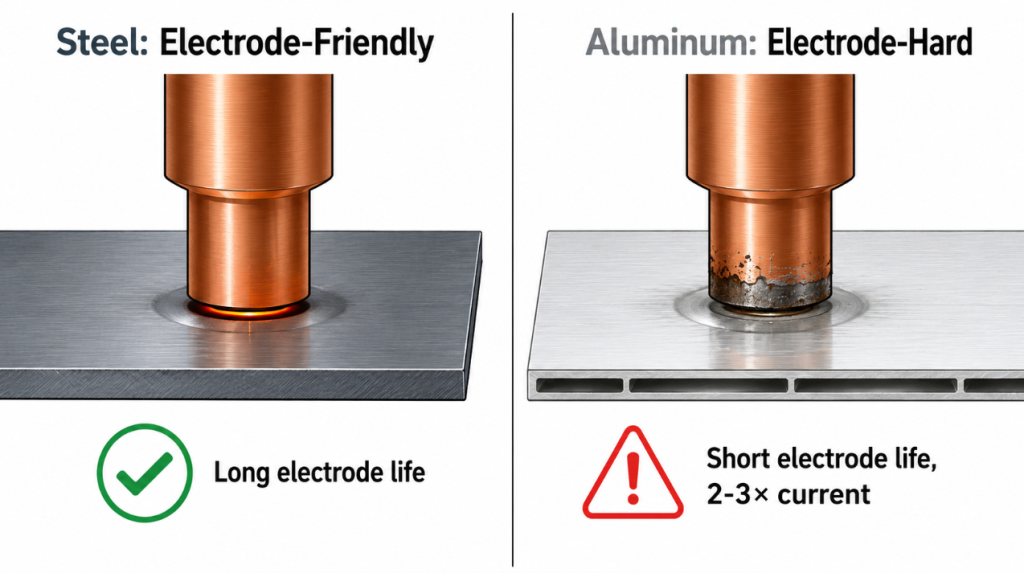
Steel is where resistance spot welding is most at home, and electrodes have a comparatively easy time of it. The reasons are worth stating, because they’re the baseline against which aluminum’s difficulty stands out.
Steel’s electrical and thermal conductivity are moderate — high enough to weld well, but not so high that enormous currents are needed. This means the heat generates where you want it, at the joint, without punishing current levels. Electrodes welding steel hold their shape and last a long time by comparison: on uncoated steel, electrode life is measured in thousands of welds before the caps need attention. In fact, research on resistance spot welding electrode life reports on the order of 6,000 weld cycles for uncoated steel and around 3,000 for zinc-coated steel, with aluminum dropping far below both. Galvanized and coated steels are harder — the zinc coating alloys with the copper and shortens electrode life relative to bare steel — but even coated steel is far gentler on electrodes than aluminum.
This is why CuCrZr is the workhorse electrode material for steel: it offers the balance of conductivity, hardness, and wear resistance that steel welding rewards, holding up well across the long electrode lives steel allows. For the bulk of steel production — bare and coated — CuCrZr in the right condition is the standard answer, and it performs. Steel is the case electrodes are, in a sense, designed around.
Why Aluminum Is So Much Harder on Electrodes
Aluminum changes everything about the electrode’s job, and it does so through three compounding challenges. Understanding them explains why aluminum electrode life is a fraction of steel’s.
Aluminum’s high conductivity demands far more current. Aluminum conducts electricity and heat extremely well — much better than steel. Because resistance welding works by generating heat from resistance to current flow, a material that conducts too well resists less, so you need far more current to generate the welding heat. Aluminum’s low resistivity and high thermal and electrical conductivity require welding currents typically two to three times greater than those for steel, as documented in studies of electrode wear in aluminum spot welding. That much more current puts far more thermal load on the electrode.
Aluminum’s surface oxide raises contact resistance and heat. Aluminum naturally forms a surface oxide layer, and that oxide is electrically very different from the metal beneath. The oxide has extremely high electrical resistance — vastly higher than the aluminum itself — so it concentrates heat right at the electrode-to-sheet contact, exactly where the electrode face is. Research measuring the aluminum oxide layer found its resistivity around 10¹⁵ ohm-meters compared to the base metal’s far lower value, generating elevated heat that accelerates electrode wear. The oxide, in effect, cooks the electrode face from the contact side.
The oxide adds a second problem beyond heat: inconsistency. Because the oxide layer forms naturally and varies in thickness across the sheet surface, the contact resistance varies from spot to spot — one weld sees a thin oxide and lower resistance, the next sees a thicker patch and higher resistance. This variability makes aluminum welds less consistent than steel welds, requiring closer process control, and it means the electrode faces an uneven, unpredictable thermal load rather than the steady conditions steel provides. So the oxide doesn’t just accelerate wear; it makes that wear irregular and the process harder to keep stable, which is one more reason aluminum demands tighter maintenance and monitoring than steel.
Aluminum sticks to copper electrodes. On top of the heat, aluminum has a strong chemical affinity for copper — the electrode material. This means aluminum tends to alloy with and stick to the copper electrode face during welding, and that Cu-Al alloying drives wear at a rate exceeding even coated steel. The electrode doesn’t just wear mechanically; it degrades chemically as aluminum picks up onto and reacts with the copper face.
This chemical degradation is worth understanding, because it’s a different kind of wear than steel imposes and it’s why aluminum electrode life is so short. Electrode degradation in aluminum welding proceeds through recognizable stages: aluminum first picks up onto the electrode face, then alloys with the copper, the contact area changes as the face is disrupted, and pitting and cavities form on the working surface. Each stage compounds the last — the alloyed, pitted face conducts and contacts differently than a clean electrode, which changes the current and pressure distribution, which degrades weld consistency. So the electrode is not simply wearing down; it’s being chemically transformed at the face by contact with aluminum, and that transformation is both faster and harder to counter than the mechanical wear steel produces. This is the fundamental reason aluminum is in a different category of difficulty: the electrode and the workpiece actively react with each other.
Put together, these three — far more current, oxide-concentrated heat, and chemical sticking — mean electrodes welding aluminum degrade fast. Where steel allows thousands of welds, aluminum can severely limit electrode life, and the electrode face pits, alloys, and loses its geometry quickly. Aluminum is simply a punishing material for a copper electrode.
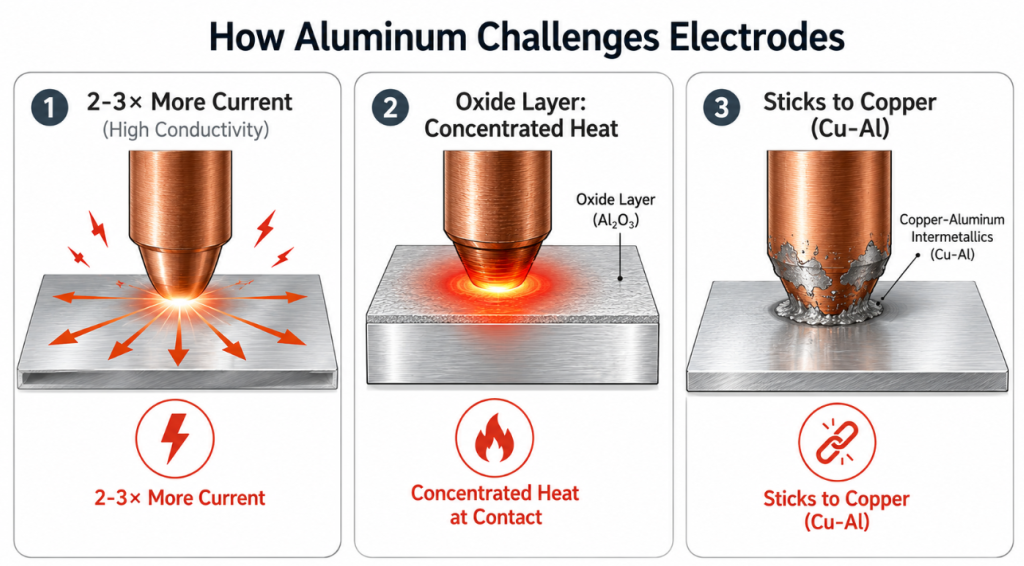
Table 1 — Why Aluminum Is Harder on Electrodes Than Steel
| Challenge | Steel | Aluminum |
|---|---|---|
| Conductivity → current needed | Moderate; normal current | Very high; 2–3× the current |
| Surface oxide | Modest (or coating) | Tough oxide; high contact resistance, concentrated heat |
| Sticking to copper | Limited | Strong Cu-Al affinity; alloys onto electrode |
| Resulting electrode life | Long (thousands of welds) | Much shorter; rapid degradation |
| Overall demand on electrode | Manageable | Severe |
The right-hand column is uniformly harsher: every factor that’s manageable with steel is amplified with aluminum. This is the core of why the two metals demand different things from an electrode.
How Electrode Choice Differs: Aluminum vs Steel
Because the two metals stress electrodes so differently, the electrode approach differs too — in material, in maintenance, and in expectations.
Steel: CuCrZr is the standard. For steel, CuCrZr’s balance of properties suits the job, and it delivers the long electrode life steel allows. This is the well-established default for the bulk of steel welding, bare and coated.
Aluminum: high conductivity matters more. For aluminum, the enormous current demand shifts the priority toward high electrical conductivity in the electrode — materials like pure copper or high-conductivity coppers become relevant, because the electrode has to pass very high current efficiently. The trade-offs differ from steel: where CuCrZr’s hardness serves steel well, aluminum’s current demands push toward conductivity, and the electrode material choice reflects that.
There’s a genuine tension here worth making explicit, because it’s why aluminum electrode selection is a compromise rather than a clean answer. The ideal aluminum electrode would have both very high electrical conductivity (to pass the huge currents without losses and heating) and high hardness and high-temperature strength (to resist the mechanical and thermal degradation aluminum inflicts). But in copper-based electrode materials, conductivity and hardness tend to trade off against each other — the alloying that raises hardness usually lowers conductivity, and vice versa. So aluminum welding forces a balance: lean too far toward conductivity and the electrode may be too soft to hold its geometry; lean too far toward hardness and it may not pass current efficiently enough for aluminum’s demands. This is part of why aluminum electrode life remains a genuine engineering challenge that ongoing research keeps working on — there is no material that perfectly satisfies both needs, so the choice is about the best balance for the specific aluminum application rather than a single obvious answer.
Aluminum demands far more frequent dressing and replacement. Whatever the material, electrodes welding aluminum need much more frequent dressing and replacement than steel electrodes, simply because they degrade so much faster. The pitting and alloying that aluminum causes mean the face needs restoring far more often, and caps reach end of life far sooner. A dressing and replacement schedule set for steel would be wildly inadequate for aluminum.
This has real cost and workflow consequences that anyone moving from steel to aluminum has to plan for. If a steel line dresses electrodes on an interval measured in a large number of welds, an aluminum line may need to dress after a small fraction of that — the face degrades so quickly that the interval compresses dramatically. That means more frequent line stops for dressing, faster consumption of electrode caps, and a correspondingly larger stock of replacement electrodes. The economics of aluminum welding are shaped by this: electrode-related downtime and consumable cost are simply higher than for steel, and a production plan that doesn’t account for it will be caught out. This is not a sign of doing something wrong — it’s inherent to welding aluminum with copper electrodes — but it does mean the maintenance and cost planning that’s relaxed for steel has to be deliberately tightened for aluminum. Budgeting steel-like electrode life for an aluminum job is one of the most common and costly planning mistakes.
The workpiece drives the electrode. The overarching principle is that the material you weld should drive the electrode you choose — material and face geometry both. Steel and aluminum are different problems, and matching the electrode to the workpiece is what gets acceptable performance. There is no single electrode that’s optimal for both; the metal decides.
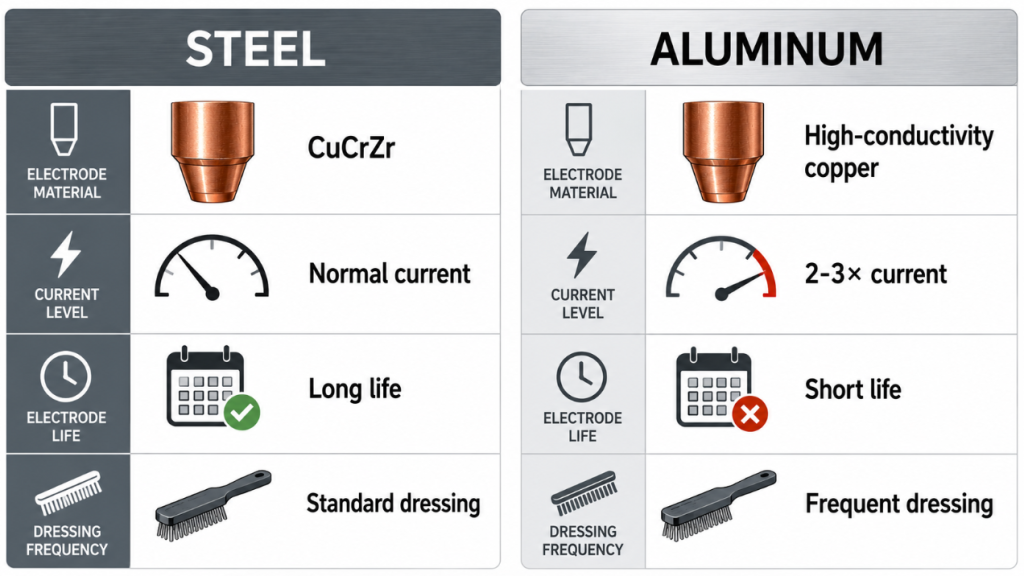
Table 2 — Electrode Approach by Workpiece
| Consideration | Steel | Aluminum |
|---|---|---|
| Typical electrode material | CuCrZr | High-conductivity copper prioritized |
| Priority property | Balance of hardness & conductivity | High electrical conductivity |
| Current level | Normal | 2–3× higher |
| Dressing / replacement frequency | Standard | Much more frequent |
| Electrode life expectation | Long | Short — plan for it |
Reading across, the two columns describe genuinely different electrode strategies. This is why “what electrode should I use?” can’t be answered without first asking “what are you welding?” — the workpiece comes first.
What This Means If You Weld Aluminum
If you weld aluminum, the practical implications follow directly from the challenges. Expect much shorter electrode life than steel and plan for it — in cost, in dressing frequency, in replacement stock. Prioritize electrode conductivity to handle the high currents aluminum demands. Dress more often to counter the rapid degradation. And recognize that the oxide and sticking are inherent to welding aluminum with copper electrodes — they’re managed, not eliminated, so consistent process control and maintenance matter more than they do with steel.
None of this makes aluminum un-weldable — it’s welded in volume, including in automotive, precisely because the weight savings justify the effort. But it does mean aluminum welding is a more demanding electrode environment that rewards the right electrode choice and disciplined maintenance. Going in with steel expectations is the mistake; going in prepared for aluminum’s demands is how you get workable electrode life.
For steel — where most of our customers work — the picture is much more comfortable: CuCrZr, sensible dressing, and long electrode lives. The contrast is the point of this article. The same electrode logic that’s relaxed for steel becomes demanding for aluminum, and knowing which metal you’re dealing with is the starting point for choosing well.
Match the Electrode to the Metal
Steel and aluminum are different problems from the electrode’s point of view. Steel is forgiving — moderate current, long electrode life, CuCrZr as the reliable standard. Aluminum is demanding — two to three times the current, a tough oxide that concentrates heat, chemical sticking to copper, and dramatically shorter electrode life that calls for high-conductivity electrodes and much more frequent maintenance. The metal you weld should drive the electrode you choose, because no single electrode is optimal for both, and matching the electrode to the workpiece is what gets you the performance and life you need.
Whether you weld steel or aluminum, we can help you choose the right electrode for your material. Tell us what you’re welding — the metal, the thickness, whether it’s coated, your currents and cycle — and we’ll help you get the electrode material and geometry suited to your workpiece, with realistic guidance on the electrode life and maintenance to expect. Browse our copper spot welding electrodes, or send us your application and let us help you match the electrode to the metal you weld.
Share This Article
Latest Articles
October 20, 2026
October 20, 2026
October 20, 2026
October 20, 2026
October 20, 2026
October 20, 2026
October 20, 2026
October 20, 2026